




What's Happening?
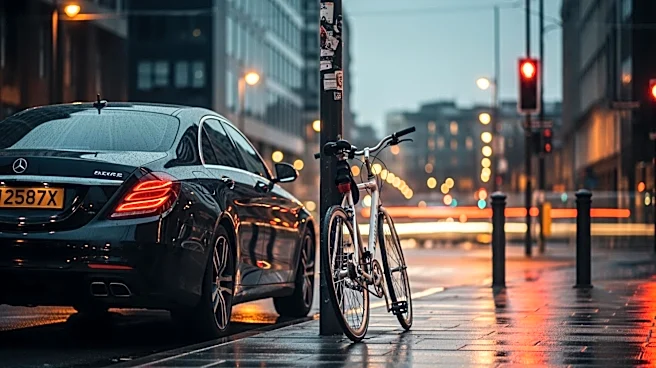
Benedict Cumberbatch, known for his roles in 'Doctor Strange' and 'Sherlock,' was involved in a verbal altercation with a cyclist in London. The incident occurred after Cumberbatch allegedly ran a red light, prompting the cyclist to confront him. The exchange,
which lasted about 10 minutes, was captured on video. During the confrontation, the cyclist accused Cumberbatch of repeatedly breaking traffic laws, which Cumberbatch partially admitted to, acknowledging he ran the light once. The altercation drew attention from passersby, including school children, whom Cumberbatch later posed with for photos. The cyclist, described as a vigilante by an eyewitness, followed Cumberbatch until he pulled over, leading to the confrontation.
Why It's Important?
This incident highlights the ongoing tensions between cyclists and motorists in urban areas, particularly in cities like London where traffic laws are strictly enforced. The involvement of a high-profile celebrity like Benedict Cumberbatch brings additional public attention to the issue of road safety and the responsibilities of all road users. It also underscores the potential for public figures to become embroiled in everyday disputes, which can quickly escalate and attract media coverage. The incident may prompt discussions about road safety regulations and the behavior of cyclists and drivers alike, potentially influencing public policy or awareness campaigns.
What's Next?
While no legal actions have been reported following the incident, it could lead to increased scrutiny of Cumberbatch's public behavior and possibly affect his public image. The incident might also spark broader discussions on social media and in public forums about road safety and the conduct of cyclists and drivers. If the video of the altercation gains significant attention, it could lead to calls for stricter enforcement of traffic laws or initiatives to improve cyclist-driver relations. Cumberbatch's response to the incident, whether through a public statement or legal action, could further influence public perception and media coverage.