




What's Happening?
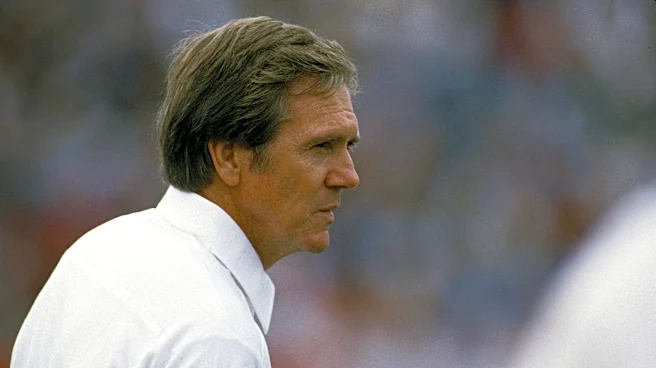
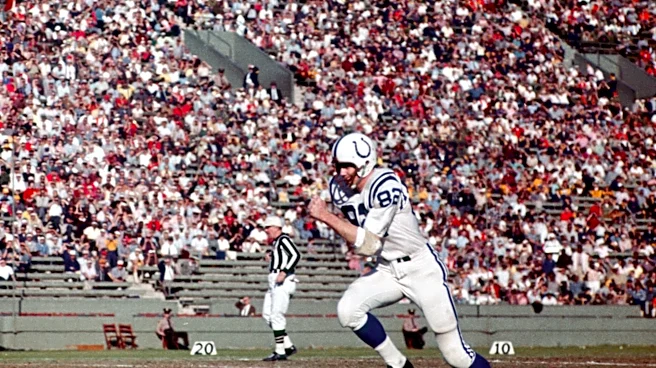
Raymond Berry, a Hall of Fame wide receiver known for his exceptional career with the Baltimore Colts, passed away at the age of 93. Berry, who was instrumental in the Colts' victory in the 1958 championship game, died peacefully at his home in Murfreesboro,
Tennessee. Carlie Irsay-Gordon, owner of the Indianapolis Colts, paid tribute to Berry, highlighting his transformative impact on the sport and his role in shaping the modern NFL. Berry's career was marked by his partnership with quarterback Johnny Unitas, forming one of the NFL's most legendary passing duos. Despite physical challenges, Berry's dedication and innovative approach to the game set new standards for wide receivers. His legacy includes leading the league in receptions multiple times and being inducted into the NFL Hall of Fame in 1973.
Why It's Important?
Raymond Berry's contributions to the NFL have had a lasting impact on the sport, influencing the way wide receivers are evaluated and trained. His career exemplifies the power of perseverance and innovation, as he overcame physical limitations to become one of the most reliable receivers in history. Berry's influence extends beyond his playing days, as he also served as a coach, leading the New England Patriots to their first Super Bowl appearance. His advocacy for drug testing in the NFL highlighted his commitment to player welfare and integrity in the sport. Berry's legacy continues to inspire players and coaches, underscoring the importance of dedication and strategic thinking in achieving success.
What's Next?
The passing of Raymond Berry may prompt further recognition of his contributions to the NFL, potentially leading to tributes or commemorations by the league and its teams. The Colts and other organizations may honor his memory through events or initiatives that celebrate his impact on the sport. Additionally, Berry's advocacy for player health and safety could influence ongoing discussions about drug testing and player welfare in the NFL. As the league continues to evolve, Berry's legacy serves as a reminder of the importance of innovation and integrity in professional sports.
Beyond the Headlines
Raymond Berry's career highlights the broader cultural and ethical dimensions of professional sports, particularly the role of athletes as role models and advocates for change. His push for drug testing in the NFL reflects a commitment to addressing issues of addiction and player health, which remain relevant in today's sports landscape. Berry's story also underscores the potential for sports to drive social change, as his efforts to improve player welfare resonate with ongoing discussions about mental health and substance abuse in athletics. His legacy challenges current and future athletes to consider their impact beyond the field.