



What's Happening?
The Bureau of Labor Statistics reported a significant increase in U.S. wholesale prices for February, with the producer price index (PPI) rising by 0.7% on a seasonally adjusted basis. This increase surpassed economists' expectations, who had predicted
a 0.3% rise. The core PPI, which excludes food and energy costs, also rose by 0.5%. On an annual basis, the headline PPI inflation reached 3.4%, marking the highest level since February 2025. The report highlighted a notable rise in services costs, particularly in portfolio management fees and securities brokerage services, which contributed to the inflationary pressures. Goods prices also saw a 1.1% increase, with food and energy prices rising by 2.4% and 2.3%, respectively.
Why It's Important?
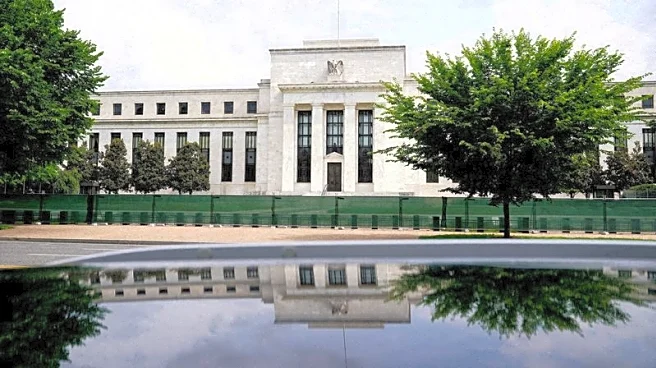
The persistent rise in wholesale prices underscores ongoing inflationary pressures in the U.S. economy, complicating the Federal Reserve's efforts to manage interest rates. The increase in services costs, a significant component of the PPI, suggests that inflation is not solely driven by volatile food and energy prices. This development could influence the Federal Reserve's monetary policy decisions, as maintaining price stability is a key objective. The report also comes amid geopolitical tensions in the Middle East, which have contributed to rising energy prices, further exacerbating inflation concerns.
What's Next?
The Federal Reserve is expected to release its latest interest rate decision, with market participants anticipating that the central bank will maintain its current interest rate range. However, the persistent inflationary pressures may prompt the Fed to reconsider its stance in future meetings. The ongoing geopolitical tensions and their impact on energy prices will likely remain a critical factor in the Fed's decision-making process. Additionally, the market will closely monitor upcoming inflation reports to assess the trajectory of price increases and their implications for monetary policy.