
What's Happening?
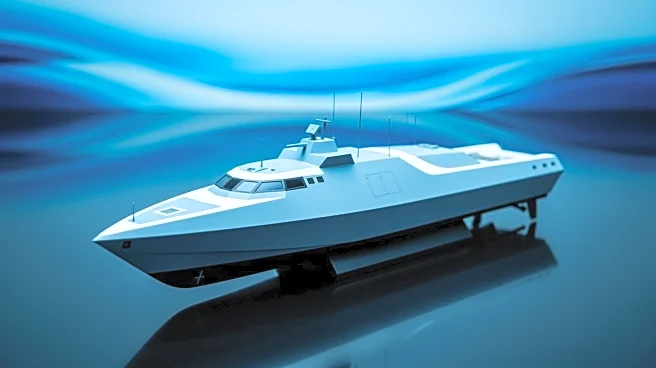
Textron Systems Corporation has unveiled its fifth-generation Multi Mission Uncrewed Surface Vessel (MMUSV), a significant advancement in the company's Common Unmanned Surface Vehicle (CUSV) lineup. This
new vessel is engineered for high-endurance operations, boasting twice the fuel and payload capacity of its predecessors, with a payload capacity of up to 13,000 pounds. Designed to withstand conditions up to Sea State 5, the MMUSV also features a towing capacity exceeding 4,000 pounds. This development follows a Low-Cost Unmanned Maritime Solution (Large) award granted in August 2025, aimed at expanding the U.S. Navy's capabilities in surface warfare, mine countermeasures, signals intelligence, and maritime surveillance. David Phillips, Senior Vice President of Air, Land, and Sea Systems at Textron, highlighted the company's three-decade leadership in autonomous systems, emphasizing the MMUSV's enhanced mission capabilities and rapid production potential.
Why It's Important?
The introduction of the MMUSV represents a strategic enhancement of the U.S. Navy's operational capabilities, particularly in unmanned maritime operations. By doubling the payload and fuel capacity, the vessel offers increased endurance and versatility, crucial for modern naval warfare and surveillance missions. This advancement supports the Navy's strategic objectives of maintaining maritime dominance and operational readiness. The MMUSV's capabilities in mine countermeasures and signals intelligence are particularly significant, as they address evolving threats and enhance the Navy's ability to conduct complex missions with reduced risk to personnel. The vessel's rapid production and deployment potential also align with the Navy's need for scalable and cost-effective solutions.
What's Next?
Textron Systems is expected to continue its collaboration with the U.S. Navy, focusing on the integration and deployment of the MMUSV within existing naval operations. The company is also engaged in a multi-year development contract for MAGNUSS, a next-generation minesweeping payload, which could further enhance the Navy's capabilities. As the MMUSV enters service, it may prompt further investments in unmanned systems and influence future naval procurement strategies. The Navy and its allies will likely assess the vessel's performance in various operational scenarios, potentially leading to additional orders and expanded use in international naval operations.