






What's Happening?
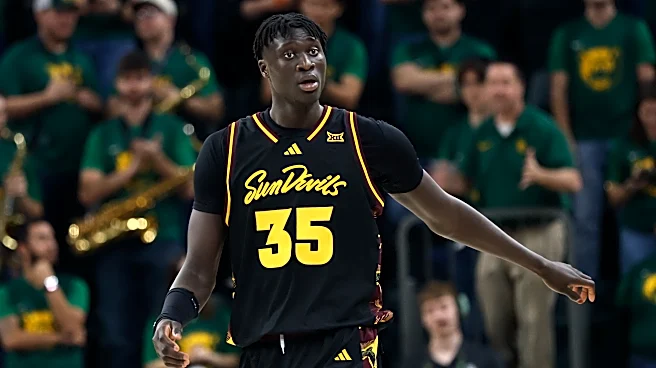
The Arizona State Sun Devils, under the guidance of head coach Randy Bennett, are taking a unique approach to their basketball roster construction by focusing on depth rather than star power. Unlike many college basketball teams that prioritize recruiting
standout players or future NBA prospects, Arizona State is assembling a team of versatile, solid players without a clear superstar. This strategy involves building a roster with players who can contribute in various roles, such as Marcus Vaughns, Paulius Murauskas, and Dillan Shaw, who are not widely recognized names but fit well together. The team aims to be defensively strong and difficult to play against, which could be advantageous in the competitive Big 12 Conference. This approach is seen as both a risk and a refreshing change, as it emphasizes balance and teamwork over individual talent.
Why It's Important?
This strategy by Arizona State could have significant implications for college basketball, particularly in the Big 12 Conference. By focusing on depth and defensive strength, the Sun Devils may be able to capitalize on the current state of flux within the conference, where many teams are undergoing transitions with new rosters and coaching changes. If successful, this approach could challenge the conventional wisdom that star players are essential for success in college basketball. It highlights the potential for teams to succeed through cohesion and strategic gameplay rather than relying solely on individual talent. This could influence other programs to reconsider their recruitment strategies, potentially leading to a shift in how college basketball teams are built.
What's Next?
The success of Arizona State's strategy will largely depend on their performance in the upcoming season. If the team can maintain consistency and leverage their defensive capabilities, they might secure a strong position in the Big 12 Conference. However, the lack of a go-to scorer could be a challenge in critical game situations, particularly in high-stakes matches. The team's progress will be closely watched by other programs and analysts, as it could set a precedent for alternative roster-building strategies in college basketball. The development of any player into a standout performer could further enhance the team's prospects and validate their unconventional approach.