
What's Happening?
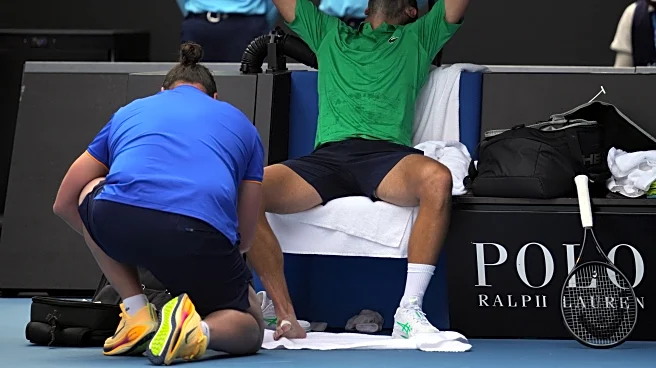
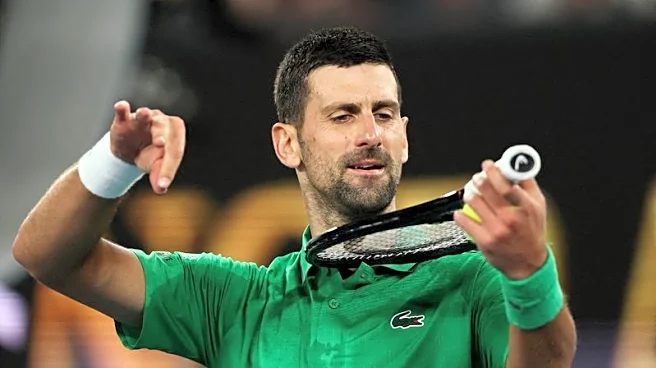
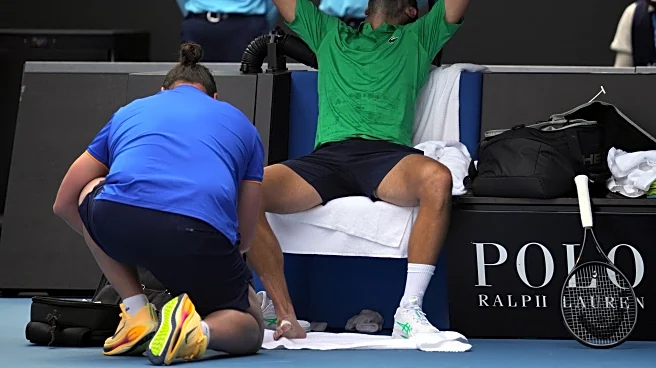
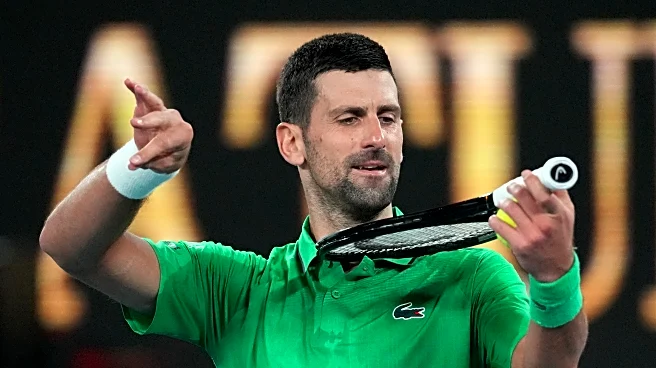
During the Australian Open semifinal, Alexander Zverev expressed frustration over Carlos Alcaraz's use of a medical timeout in the third set. Zverev, who lost the match in a grueling five-set battle lasting nearly 5 1/2 hours, questioned the legitimacy of the timeout, suggesting it was taken for cramps, which he believes should not warrant such a break. Alcaraz, however, defended his decision, stating that the pain was localized and required assessment, which is permissible under tournament rules. The match, played in temperatures ranging from 80 to 86 degrees Fahrenheit, saw Alcaraz struggle with an upper right leg issue, prompting the timeout. Despite the setback, Alcaraz managed to continue and eventually win the match.
Why It's Important?
The incident highlights
ongoing debates in tennis regarding the rules and fairness of medical timeouts, especially in high-stakes matches. Zverev's comments reflect a broader concern among players about the potential for misuse of these breaks, which can disrupt the flow of a match and impact its outcome. The situation underscores the need for clear guidelines and consistent enforcement to maintain competitive integrity. For players, the ability to manage physical strain and injuries during matches is crucial, and the rules surrounding medical interventions can significantly influence their strategies and performance.
What's Next?
The controversy may prompt discussions among tennis governing bodies about the criteria for medical timeouts, potentially leading to rule clarifications or changes. Players and coaches might advocate for stricter enforcement to prevent perceived abuses. The incident could also influence how players approach future matches, with increased scrutiny on the use of medical timeouts. As the tournament progresses, the focus will remain on ensuring fair play and addressing any ambiguities in the rules.