






What's Happening?
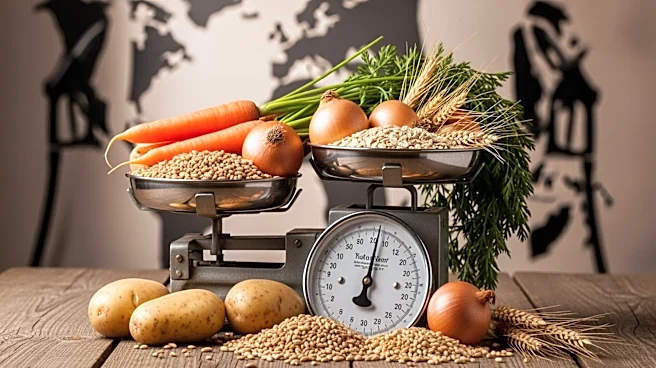
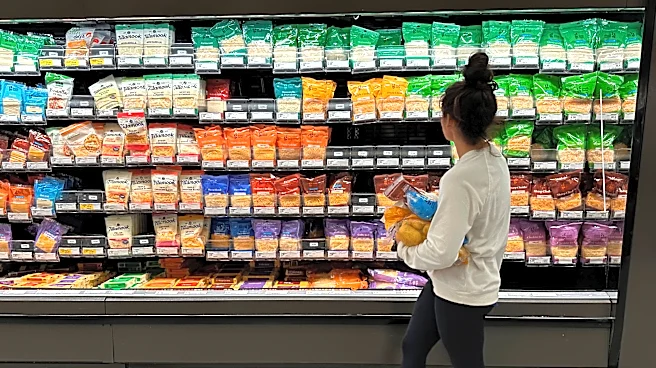
Grocery prices in the United States saw a significant increase in April, with a 2.9% rise in food eaten at home compared to the previous year. This marks the highest year-over-year inflation rate for this category since August 2023. The increase is attributed
to several factors, including high gasoline prices due to the ongoing conflict in Iran, which has disrupted global oil supplies. Diesel fuel, essential for transporting agricultural products, has seen a 61% price increase. Additionally, trade policies and extreme weather have contributed to rising costs for certain food items.
Why It's Important?
The surge in grocery prices has broad implications for American consumers and the economy. Rising food costs can strain household budgets, particularly for low-income families. The situation is further complicated by the geopolitical tensions affecting global oil supplies, which could lead to sustained high fuel prices. This scenario may impact various sectors, including agriculture and transportation, potentially leading to further price increases. The issue is likely to be a significant topic in upcoming political discussions, especially with midterm elections approaching.
What's Next?
Economists predict that the full impact of rising energy costs on food prices may not be felt immediately, as it can take several months for these costs to be reflected in retail prices. The ongoing conflict in Iran and its effects on global oil and fertilizer supplies could lead to further price increases in the future. Policymakers and industry stakeholders will need to monitor these developments closely and consider measures to mitigate the impact on consumers. Additionally, the situation may influence future trade and energy policies.