






What's Happening?
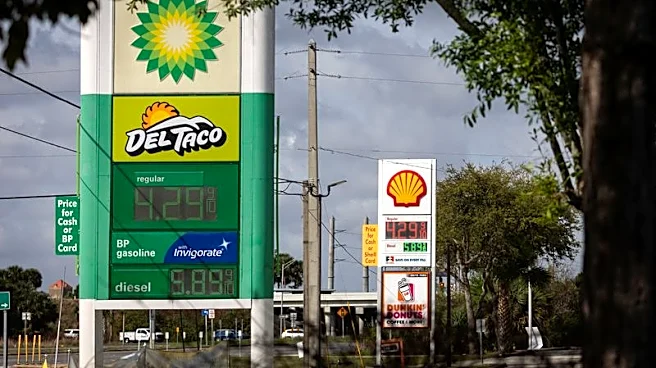
Gas prices in the United States have surged, reaching $4.12 per gallon as of early April, marking a significant increase from previous months. This rise is contributing to a decline in consumer sentiment, which has hit an all-time low according to the University
of Michigan's Consumer Sentiment Index. The increase in gas prices is attributed to ongoing global tensions, particularly the conflict involving Iran, which affects oil production and distribution. The Energy Information Administration reported a 21% month-over-month increase in gas prices, reflecting the fastest pace on record. This situation is reminiscent of June 2022, when gas prices soared due to inflation and geopolitical issues, notably Russia's war in Ukraine. The visibility of gas prices, often displayed prominently at stations, makes them a key economic indicator for many Americans, influencing their perception of the economy.
Why It's Important?
The rise in gas prices has significant implications for the U.S. economy and its citizens. As a major component of daily expenses, higher gas prices can lead to increased costs for commuting and transportation, affecting household budgets. This is particularly impactful as a majority of Americans rely on personal vehicles for commuting. The situation also highlights the vulnerability of the U.S. economy to global geopolitical tensions, such as those involving Iran, which can disrupt oil supply chains. Additionally, the correlation between gas prices and consumer sentiment suggests that prolonged high prices could further dampen economic confidence, potentially affecting consumer spending and economic growth. The situation underscores the need for energy policy considerations and potential shifts towards alternative energy sources to mitigate such impacts.
What's Next?
If gas prices remain high, there could be several consequences. Consumers may continue to adjust their spending habits, prioritizing essential travel and seeking cost-saving measures, such as using credit cards with fuel discounts. The ongoing geopolitical tensions, particularly in the Strait of Hormuz, could lead to further volatility in oil prices, affecting global markets. Policymakers may face pressure to address energy independence and explore alternative energy solutions to reduce reliance on volatile oil markets. Additionally, the upcoming midterm elections could see energy policy becoming a significant issue, with political leaders needing to address public concerns over fuel costs and economic stability.