



What's Happening?
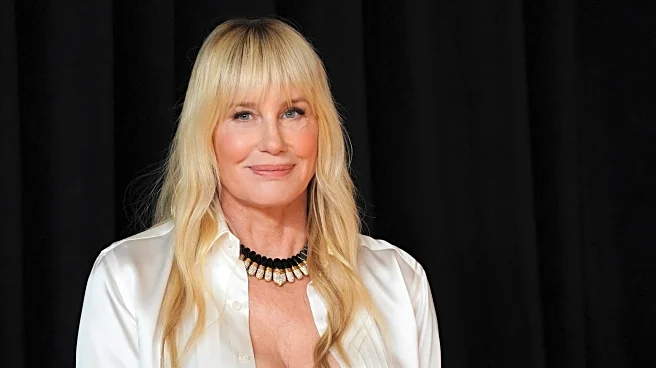
Daryl Hannah has publicly criticized the FX limited series 'Love Story: John F. Kennedy Jr. & Carolyn Bessette' for its portrayal of her as a negative influence in the narrative. In a guest essay for the New York Times, Hannah expressed her discontent
with the series, which she claims inaccurately depicts her as a 'coke-snorting, heirloom-desecrating, funeral-crashing adversary.' Hannah, who dated John F. Kennedy Jr. in the early 1990s, argues that the series uses her character as a narrative device to create tension, which she finds misleading and damaging. She refutes the series' portrayal of her actions and behaviors, stating that they are false and not representative of her life or her relationship with Kennedy. Hannah also highlights the gendered aspect of her portrayal, suggesting that it perpetuates misogynistic tropes by pitting women against each other.
Why It's Important?
The controversy surrounding the FX series highlights the broader issue of how real-life figures are depicted in dramatized media. Hannah's criticism underscores the potential harm that can arise when entertainment blurs the line between fact and fiction, particularly when it involves living individuals. This situation raises questions about the ethical responsibilities of creators in representing real people, especially when such portrayals can impact reputations and public perceptions. The series' success, with over 25 million hours viewed, amplifies the reach and potential influence of these portrayals, making the accuracy and fairness of such depictions even more critical.
What's Next?
As the series continues to gain viewership, it is likely that discussions around the ethical implications of dramatizing real-life events and individuals will intensify. Hannah's public denouncement may prompt other individuals depicted in similar media to voice their concerns, potentially leading to increased scrutiny of how such stories are crafted. The entertainment industry might face calls for more stringent guidelines or disclaimers when portraying real people, especially in cases where the narrative diverges significantly from documented facts.
Beyond the Headlines
The situation also touches on the evolving nature of media consumption in the digital age, where dramatizations can quickly become part of the collective memory. This raises concerns about the long-term impact on historical narratives and personal legacies. As entertainment content becomes more accessible and widely consumed, the responsibility of content creators to balance storytelling with factual integrity becomes increasingly important.