

What's Happening?
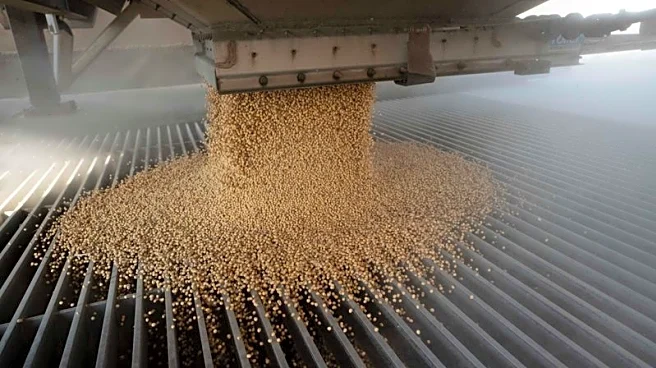
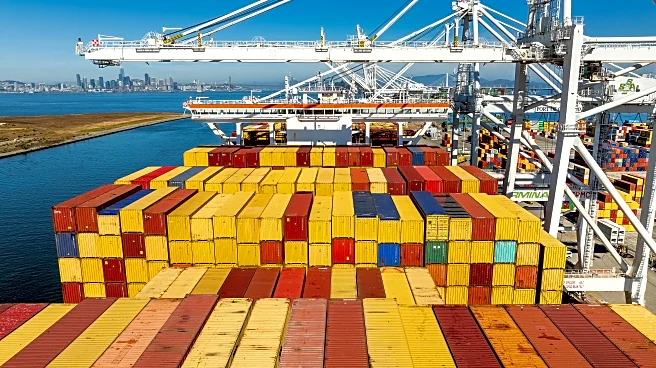
Ohio State Marion is set to host a community lecture titled 'Agriculture Trade & Policy: The Outlook for Midwest Grain Markets' on March 3. The event will feature Ian Sheldon, an Ohio State professor and the Andersons chair of agricultural marketing, trade, and policy. Sheldon will address the effects of U.S. tariffs on the grain and oilseeds sector in the Midwest, focusing on how China's retaliatory measures have impacted farm exports, particularly soybeans. Additionally, the lecture will explore the prospects for exports beyond China and emphasize the importance of maintaining strong trade relationships with Mexico and Canada, especially in light of the upcoming review of the U.S.-Mexico-Canada free trade agreement (USMCA).
Why It's Important?
The discussion is significant
as it highlights the challenges faced by Midwest farmers due to international trade tensions and tariffs. The impact on soybean exports, a major crop in the region, underscores the vulnerability of U.S. agriculture to global trade policies. By examining the potential for diversifying export markets and strengthening trade ties with neighboring countries, the lecture aims to provide insights into mitigating these challenges. The review of the USMCA is particularly crucial as it could redefine trade dynamics in North America, affecting agricultural exports and economic stability in the Midwest.
What's Next?
The lecture will offer a platform for stakeholders to engage in dialogue about future trade strategies and policies. Attendees can expect discussions on potential policy adjustments and the exploration of new markets to offset the impact of tariffs. The insights provided by Sheldon could influence future trade negotiations and policy decisions, particularly concerning the USMCA review. Stakeholders, including farmers, policymakers, and trade experts, may use this information to advocate for policies that support sustainable agricultural trade.
Beyond the Headlines
The lecture also touches on broader issues such as the interaction between trade and environmental policies, and the effects of exchange rate volatility on international trade flows. These topics are crucial for understanding the complex dynamics of global trade and its impact on U.S. agriculture. Additionally, the discussion on carbon tariffs and intellectual property rights on U.S. seed exports highlights the intersection of trade policy with environmental and technological considerations, which could shape future agricultural practices and policies.