



What's Happening?
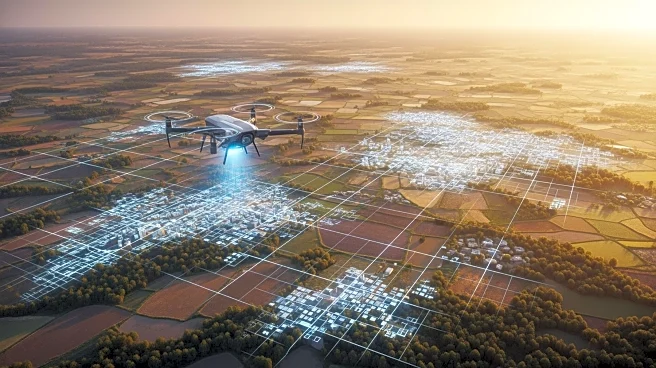
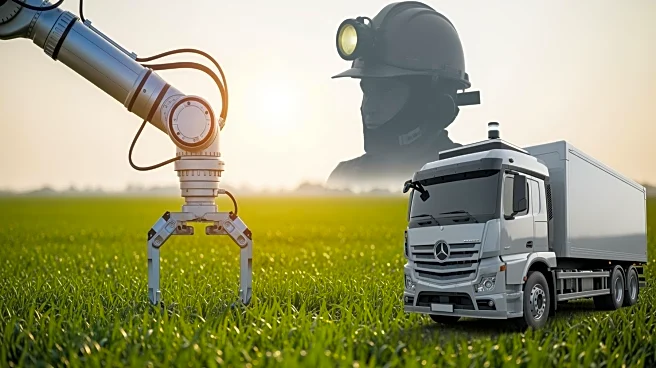
Qasar Younis, CEO of Applied Intuition, a $15 billion AI company, has highlighted that the AI boom is poised to significantly impact physical industries such as farming, mining, and trucking. According to Younis, these sectors are likely to benefit from
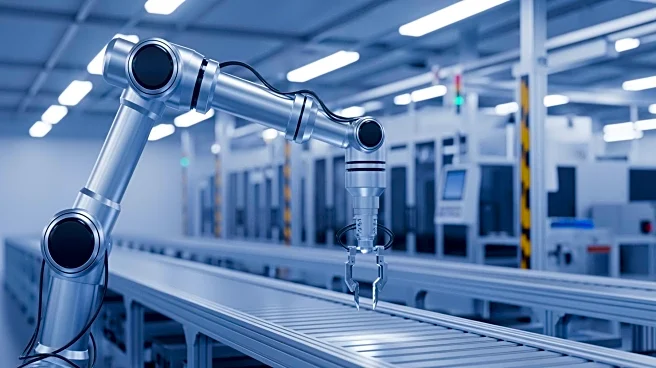
AI technologies as they face labor shortages. The average age of farmers is increasing, with many nearing retirement, which could exacerbate labor shortages in the coming decade. Younis suggests that AI will not replace jobs in these industries but will instead help fill the gaps by adding intelligence to existing machinery. This perspective comes amid concerns on Wall Street about AI potentially eliminating white-collar jobs and slowing economic growth. However, industry leaders like Daniel Diez of Agility Robotics argue that AI can address labor shortages in manufacturing, where finding workers is increasingly challenging.
Why It's Important?
The potential shift of AI benefits from software to physical industries could reshape the economic landscape. As AI technologies are integrated into sectors like farming and trucking, these industries may experience increased efficiency and productivity. This could lead to a more balanced distribution of AI's economic benefits, countering fears of job losses in white-collar sectors. The focus on enhancing existing machinery with AI could also drive innovation in traditional industries, potentially leading to new business models and opportunities. Moreover, addressing labor shortages in these sectors could stabilize supply chains and support economic growth, especially in rural areas where these industries are prevalent.
What's Next?
As AI continues to develop, its integration into physical industries is expected to accelerate. Companies in these sectors may increasingly adopt AI technologies to remain competitive and address labor challenges. Policymakers and industry leaders will need to consider strategies to support this transition, including workforce training and investment in AI infrastructure. The broader economic implications of AI's impact on physical industries will likely be a topic of discussion among economists and business leaders, as they assess the potential for AI to drive growth and innovation across the economy.