



What's Happening?
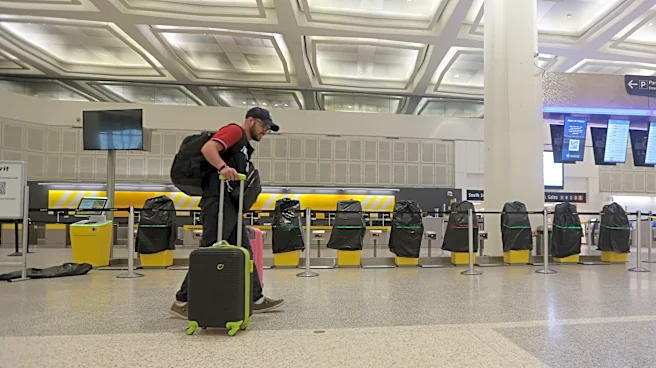
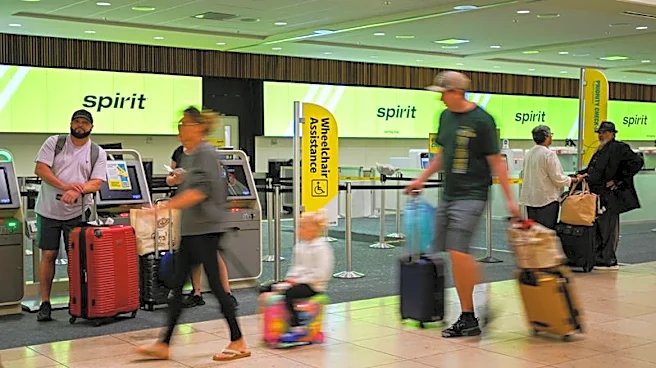
Spirit Airlines has ceased operations, leaving thousands of passengers stranded and resulting in the loss of approximately 17,000 jobs. The shutdown occurred after a $500 million bailout from the Trump administration failed to materialize. A Spirit Airlines pilot
emotionally informed passengers mid-flight about the shutdown, marking the end of the airline's 43-year history. The airline had been struggling financially for years, and its collapse was exacerbated by the Biden administration's decision to block a merger with JetBlue in 2024. In response to the shutdown, other airlines like United, Delta, JetBlue, and Southwest have capped their prices to accommodate displaced Spirit passengers.
Why It's Important?
The shutdown of Spirit Airlines represents a significant disruption in the U.S. aviation industry, particularly affecting budget-conscious travelers who relied on the airline's low-cost services. The loss of 17,000 jobs adds to the economic challenges faced by the aviation sector, which has been struggling with financial instability and competition. The failure of the bailout and the blocked merger highlight the complexities of government intervention in private industry and the potential consequences of regulatory decisions. The situation underscores the need for strategic planning and financial resilience in the airline industry.