
What's Happening?
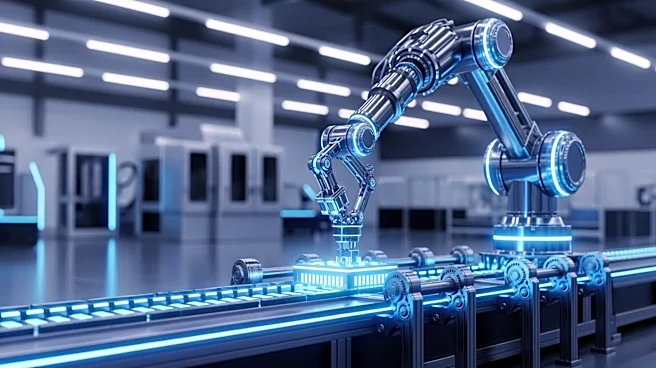
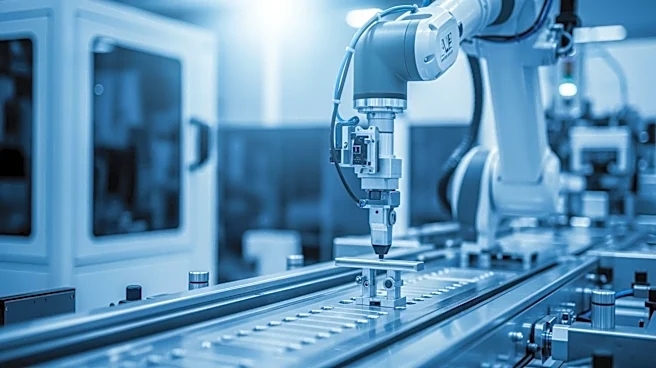
Flex, a leading contract manufacturer, is expanding its automation capabilities through a partnership with Teradyne Robotics. This collaboration involves deploying robotics solutions within Flex's facilities
and manufacturing key components for Teradyne's customers. The move reflects a broader industry trend towards scaling automation to improve productivity, quality, and resilience in manufacturing. Technologies like collaborative robots and autonomous mobile robots are transitioning from pilot projects to large-scale production environments. Rodrigo DallOglio, president of operational excellence and transformation at Flex, highlights the challenges and benefits of scaling automation, emphasizing the role of AI-enabled robotics in enhancing operational flexibility and addressing labor shortages.
Why It's Important?
The expansion of automation in manufacturing is crucial for maintaining competitiveness in a rapidly evolving industry. As product complexity increases and demand shifts, manufacturers like Flex need to improve precision and accelerate production timelines. Automation technologies provide the necessary tools to enhance efficiency and responsiveness. The partnership with Teradyne Robotics allows Flex to leverage advanced robotics solutions, strengthening its global operations and addressing supply chain uncertainties. This development is significant as it demonstrates the growing importance of automation in contract manufacturing, where companies must balance flexibility with standardized production processes to meet diverse customer needs.
What's Next?
The future of manufacturing automation involves further integration of physical AI capabilities, which enable systems to adapt to changing production conditions. While fully autonomous factories are still a distant goal, AI-enabled robotics are already delivering practical benefits. Flex's approach to scaling automation involves validating workflows in single environments before replicating them across multiple sites. This strategy ensures that automation solutions are designed with scalability in mind, allowing for continuous improvement and adaptation. As the industry progresses, the focus will likely remain on developing standardized solutions that can be easily integrated into existing operations, enhancing both flexibility and efficiency.