






What's Happening?
The Chicago Shakespeare Theater has premiered a new theatrical adaptation of 'Brokeback Mountain,' originally a neo-Western romance film directed by Ang Lee. This adaptation, which is based on Annie Proulx's 1997 short story rather than the film, introduces
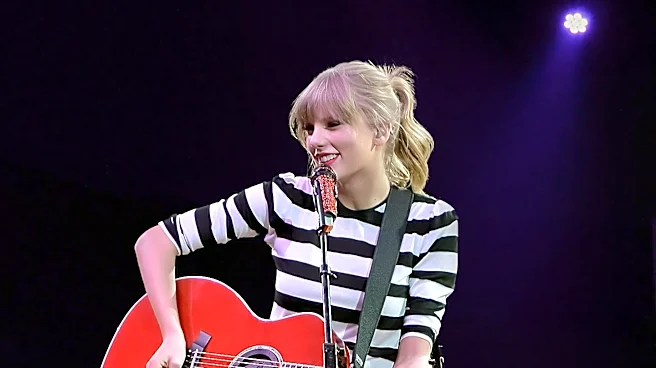
a musical element to the narrative. The production features a balladeer, played by Kat Eggleston, who performs songs with a country Western and folk vibe, composed by Dan Gillespie Sells. The story follows two cowboys, Ennis Del Mar and Jack Twist, portrayed by Harrison Ball and Jack Cameron Kay, respectively, as they navigate their complex relationship in the post-World War II era. The adaptation aims to capture the emotional depth of the original story while offering a new dimension through music.
Why It's Important?
This adaptation of 'Brokeback Mountain' is significant as it attempts to reinterpret a well-known story through the medium of theater and music. By incorporating musical elements, the production seeks to provide a fresh perspective on the characters' internal struggles and emotions, which were previously conveyed through subtext in the film. This approach could attract both new audiences and fans of the original film, offering them a different experience of the story. The production also highlights the ongoing cultural relevance of 'Brokeback Mountain,' particularly in its exploration of themes such as love, identity, and societal norms. As it coincides with Pride Month, the adaptation underscores the continued importance of LGBTQ+ narratives in the arts.
What's Next?
The production is scheduled to run through June 28 at the Chicago Shakespeare's Courtyard Theater on Navy Pier. As the show progresses, it may receive further critical and audience feedback, which could influence potential future adaptations or revivals. The success of this musical version could inspire other theaters to explore similar adaptations of well-known films or stories, potentially leading to a broader trend of integrating music into dramatic narratives. Additionally, the reception of this adaptation may impact discussions around the representation of LGBTQ+ stories in theater and the arts more broadly.