




What's Happening?
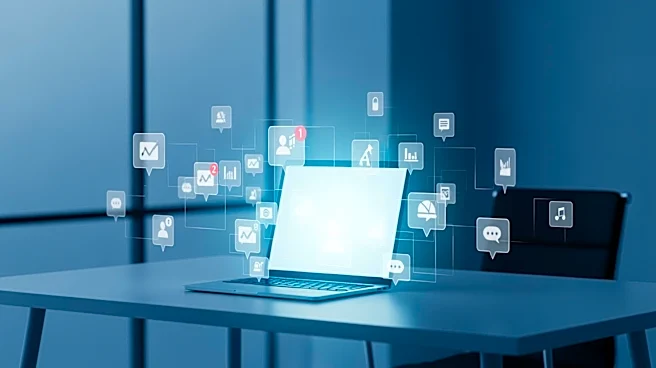
Employee engagement in the U.S. has reached its lowest point in a decade, with only 31% of employees feeling engaged at work, according to Gallup's annual workplace report. The decline is attributed to digital overload, where constant notifications from
video conferencing, email, and messaging apps distract employees. This fragmentation of communication tools leads to a sense of overwhelm and disconnection from the company's mission. Experts like Jenny Shiers from Unily and Macaire Montini from HiBob highlight the impact of these distractions on employee confidence and engagement, particularly in hybrid work environments.
Why It's Important?
The decline in employee engagement has significant implications for productivity and workplace satisfaction. As digital tools become more prevalent, companies must address the challenges of digital overload to maintain a motivated workforce. The issue affects not only individual employees but also the overall efficiency and culture of organizations. With the global economy losing an estimated $10 trillion annually due to disengagement, businesses must find ways to streamline communication and reduce distractions. This situation underscores the need for a holistic approach to employee engagement, involving leadership, HR, and IT departments.
What's Next?
Organizations are likely to reevaluate their digital communication strategies to mitigate the effects of digital overload. This may involve consolidating communication tools and providing training to help employees manage digital distractions. Companies might also explore the use of AI to create more personalized and efficient work experiences. As businesses adapt to these challenges, they will need to balance technological advancements with the need for human connection and trust. The role of managers will be crucial in fostering engagement and ensuring employees feel connected to their work and the organization.