


What's Happening?
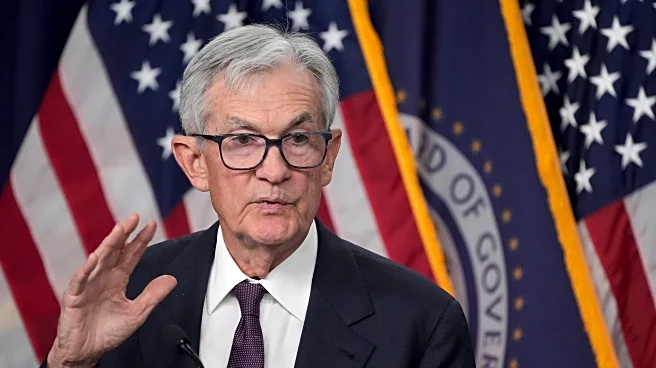
Gold prices have experienced a significant decline, marking their longest losing streak since late 2024. This downturn is attributed to Federal Reserve Chair Jerome Powell's comments on the impact of rising energy prices on overall inflation. Powell emphasized
the importance of maintaining mildly restrictive interest rates, which has led traders to adjust their expectations regarding potential rate cuts this year. As a result, gold, which typically performs well in a lower-rate environment, saw a 3% drop. The Federal Reserve's decision to keep interest rates unchanged, while acknowledging increased uncertainty due to geopolitical tensions in the Middle East, has further influenced market dynamics. The escalation of conflict in the region has also contributed to a selloff in risk assets, including equities, prompting some investors to liquidate gold holdings to raise cash.
Why It's Important?
The decline in gold prices highlights the broader economic implications of the Federal Reserve's monetary policy and geopolitical tensions. As energy prices rise, inflationary pressures increase, complicating the Federal Reserve's dual mandate to maximize employment and stabilize prices. The decision to maintain restrictive interest rates reflects the Fed's cautious approach in navigating these challenges. For investors, the current environment presents a complex landscape where traditional safe-haven assets like gold are affected by broader market selloffs and currency fluctuations. The situation underscores the interconnectedness of global events and their impact on U.S. financial markets, influencing investment strategies and economic forecasts.
What's Next?
Looking ahead, the Federal Reserve's stance on interest rates will continue to be a focal point for investors. Any changes in geopolitical tensions, particularly in the Middle East, could further influence energy prices and, consequently, inflation expectations. Market participants will closely monitor upcoming economic data releases, such as inflation and employment reports, to gauge the Fed's future policy moves. Additionally, the ongoing conflict in the Middle East may lead to further volatility in energy markets, impacting global supply chains and economic stability. Stakeholders, including policymakers and investors, will need to adapt to these evolving conditions to mitigate risks and capitalize on potential opportunities.