
What's Happening?
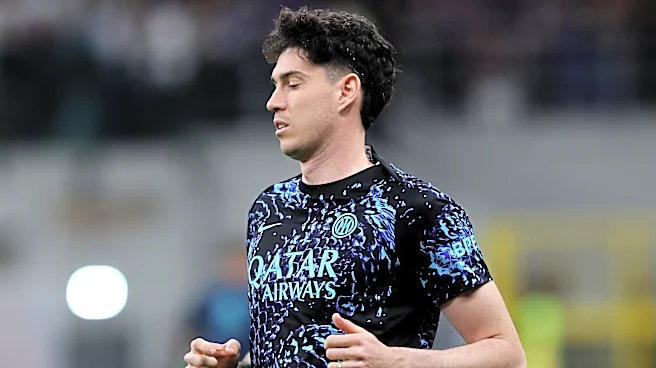
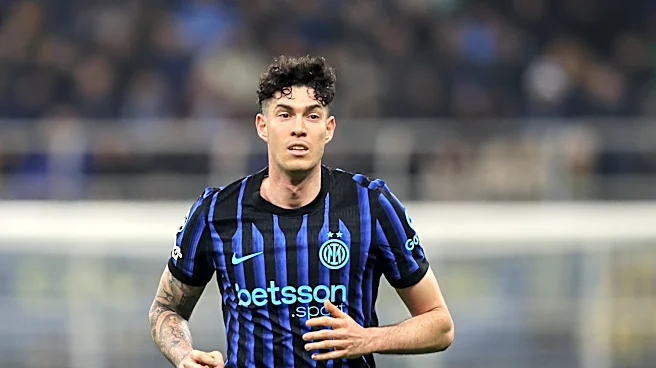
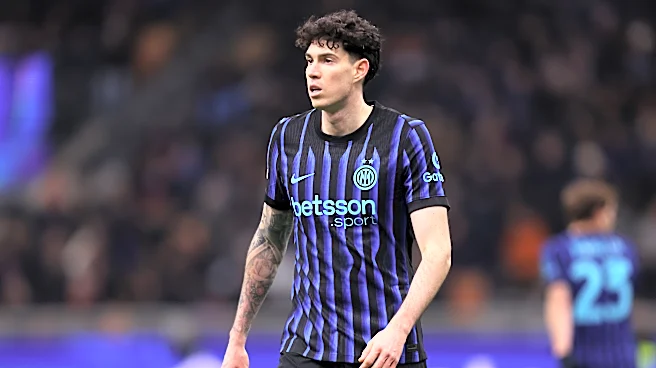
Giuseppe Marotta, the president of Inter Milan, has publicly defended Alessandro Bastoni, a defender for the club, against what he describes as a 'disgraceful lynching' by the public. This defense comes
ahead of Inter Milan's match against Roma. Marotta emphasized Bastoni's value to both Inter Milan and Italian football, dismissing rumors that the player is being forced to leave the club. He criticized the public's harsh treatment of Bastoni, attributing it to a broader social phenomenon where everyone acts as a football expert. Marotta also addressed the ongoing crisis in Italian football, which has been exacerbated by Italy's failure to qualify for the World Cup. He called for a calm and unified approach to address the issues facing Italian football, highlighting the need for a non-confrontational debate to find a single path forward.
Why It's Important?
The defense of Bastoni by Inter Milan's president highlights the pressures faced by young athletes in high-profile sports. The public criticism of Bastoni reflects a broader issue within Italian football, where the national team's recent failures have led to increased scrutiny and blame. Marotta's comments underscore the need for a more supportive environment for players, which could help in nurturing talent and improving the competitiveness of Italian football on the international stage. The situation also points to the challenges faced by sports organizations in managing public perception and protecting their players from undue criticism. The call for unity and a strategic approach to resolving the crisis in Italian football could have significant implications for the future of the sport in Italy.
What's Next?
Marotta's call for a unified approach to address the crisis in Italian football suggests that discussions and strategic planning may be on the horizon. Stakeholders in Italian football, including clubs, players, and governing bodies, may need to collaborate to develop solutions that address the root causes of the national team's struggles. This could involve investing in youth development programs, improving coaching standards, and fostering a more positive public discourse around the sport. The outcome of these efforts could determine the future trajectory of Italian football and its ability to compete on the world stage.