







What's Happening?
Senators Marsha Blackburn and Amy Klobuchar have criticized Meta CEO Mark Zuckerberg for the company's decision to remove advertisements from law firms offering representation to victims of social media addiction. This action follows significant legal
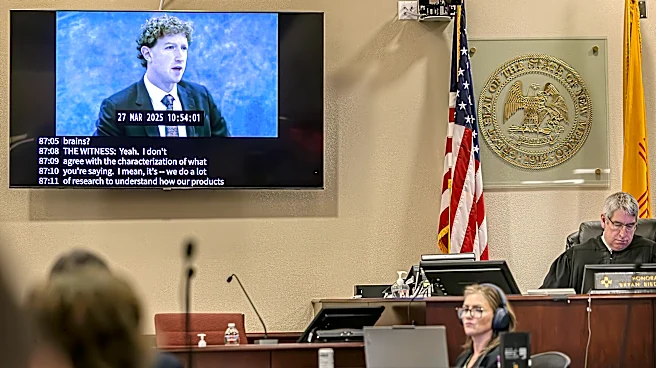
verdicts against Meta in Los Angeles and New Mexico, where the company was found to have failed in protecting minors from harm. The senators argue that Meta's removal of these ads is an attempt to protect its business model, which they claim profits from the addiction of young users. The criticism is part of a broader scrutiny of social media companies, including Meta, Google, TikTok, and Snap, which are facing numerous lawsuits for failing to safeguard minors online. Meta has defended its actions by stating that it will not allow trial lawyers to profit from its platforms while simultaneously claiming they are harmful.
Why It's Important?
The actions of Meta and the subsequent criticism from Senators Blackburn and Klobuchar highlight ongoing concerns about the impact of social media on youth, particularly regarding mental health issues like anxiety and depression. The removal of ads by Meta could limit the ability of affected individuals to seek legal recourse, potentially reducing accountability for social media companies. This situation underscores the tension between corporate interests and public health, especially as lawmakers push for legislation like the Kids Online Safety Act, which aims to impose stricter safety standards on social media platforms. The outcome of these legal and legislative efforts could significantly influence how social media companies operate and their responsibility towards user safety.
What's Next?
The ongoing legal battles and legislative efforts suggest that social media companies may face increased pressure to implement more robust safety measures. The Kids Online Safety Act, if passed, could impose a legal duty of care on these platforms, potentially leading to significant changes in how they manage user interactions and content. Additionally, the public and legal scrutiny may prompt other social media companies to preemptively enhance their safety protocols to avoid similar criticisms and legal challenges. The response from Meta and other companies to these pressures will be crucial in shaping the future landscape of social media regulation.