





What's Happening?
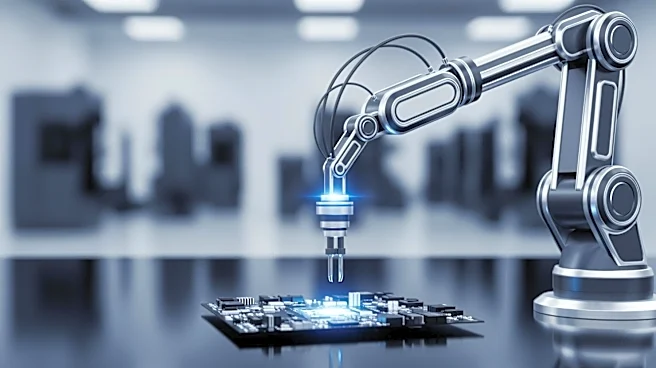
The manufacturing industry is undergoing a significant transformation as artificial intelligence (AI) and robotics begin to integrate more closely, changing the way factories operate. According to a study by IEEE, 52% of technologists believe that robotics will
be heavily influenced by AI, with 35% highlighting supply chain and warehouse automation as key areas of impact. This shift is driven by the need to address challenges such as labor shortages and supply chain volatility. AI-powered robotics are emerging as a solution, enabling adaptive systems that replace traditional hard-coded automation. These systems can adjust in real-time to changes in product mix and process flow, reducing downtime and the need for specialized engineering support. AI also enhances warehouse automation, allowing for decision-aware systems that dynamically prioritize tasks based on real-time data. This integration of AI acts as a unifying intelligence layer, improving predictive maintenance and overall efficiency.
Why It's Important?
The integration of AI and robotics in manufacturing is crucial as it addresses persistent industry challenges like labor shortages and supply chain disruptions. By enabling adaptive and intelligent systems, manufacturers can increase efficiency and flexibility, making it easier to manage high-mix, low-volume production. This transformation not only optimizes the economics of manufacturing but also extends the life of robotic assets and accelerates payback periods. As manufacturers adopt regionalized supply chains, the ability to quickly adapt to new challenges becomes vital. The AI-driven systems also democratize automation, making it accessible to smaller manufacturers who may lack resources for specialized engineering. This shift is expected to redefine operational excellence, with manufacturers who embrace this convergence early gaining a competitive edge.
What's Next?
Looking ahead, the focus will be on further integrating AI as the cognitive layer in manufacturing systems, creating environments that are not only automated but also intelligent. This will involve enhancing human-robot collaboration, where AI interfaces allow operators to interact with robots through natural language and gestures. As the industry moves towards 2026 and beyond, the emphasis will be on creating flexible, resilient, and continuously improving manufacturing systems. Manufacturers will need to prioritize robotic supervision, systems thinking, and data literacy in their workforce strategies to fully leverage the benefits of AI and robotics integration.