






What's Happening?
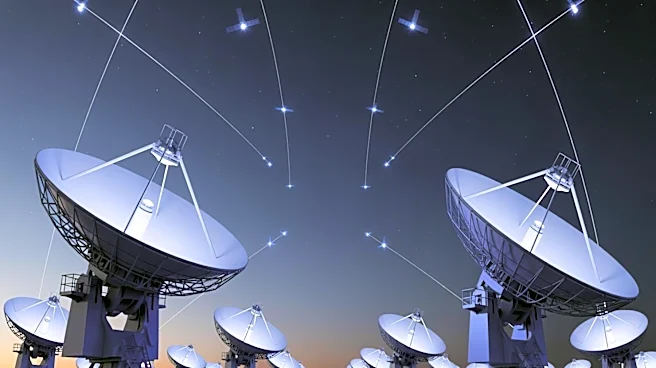
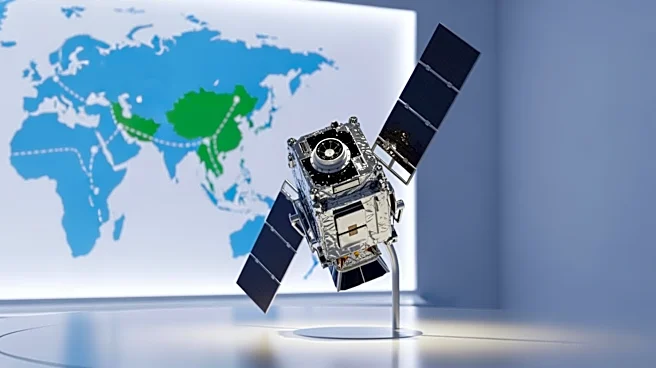
The satellite industry is encountering a significant challenge known as the 'cardinality wall,' a bottleneck caused by the sheer volume and complexity of telemetry data from expanding low Earth orbit (LEO) constellations. Traditional telemetry systems,
designed for smaller missions, are struggling to handle the millions of telemetry streams generated by large satellite fleets. This issue is forcing operators to rethink their ground systems, as the high cardinality of telemetry data can lead to operational bottlenecks and liabilities. The challenge lies in preserving enough context and fidelity to manage autonomous, software-defined fleets at scale, as telemetry infrastructure becomes mission-critical.
Why It's Important?
As LEO constellations grow, the ability to manage and analyze telemetry data effectively is crucial for maintaining operational visibility and mission resilience. The cardinality wall represents a significant hurdle for satellite operators, as it impacts anomaly detection, system performance monitoring, and predictive maintenance. Addressing this challenge is essential for the continued expansion and success of satellite networks, which support critical applications such as global broadband and national security. The industry's response to this issue could drive innovation in telemetry infrastructure and influence the design of future satellite systems.
What's Next?
Operators are exploring solutions to overcome the cardinality wall, such as decoupling telemetry pipelines and adopting time series-oriented architectures. These approaches aim to stabilize real-time monitoring and support long-term data analysis. As the industry adapts to the realities of scale and distribution, telemetry systems may evolve to behave more like distributed infrastructure. The development of new technologies and strategies to manage high-cardinality telemetry data will be crucial for the future of LEO operations. Collaboration between satellite operators, technology providers, and regulatory bodies may also play a role in addressing this challenge.