



What's Happening?
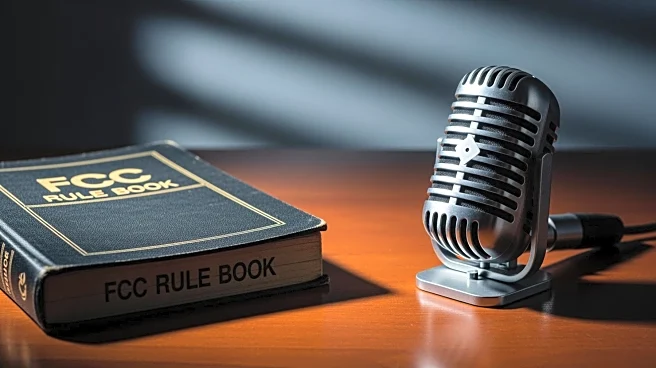
Stephen Colbert has intensified his dispute with CBS over the network's decision not to air his interview with Democratic Senate candidate James Talarico. CBS cited the FCC's 'equal time' rule as the reason, which requires broadcasters to offer equal airtime to political candidates. Colbert criticized the network for not standing up to what he perceives as political pressure from the Trump administration. The interview was instead released on YouTube, where it attracted millions of views. Colbert's show is set to end in May, following CBS's decision to cancel it due to financial losses.
Why It's Important?
This situation underscores the challenges media companies face in balancing regulatory compliance with editorial freedom. The FCC's 'equal time' rule, although
rarely enforced for talk shows, can complicate programming decisions, especially during election seasons. Colbert's public criticism of CBS highlights concerns about media independence and the potential influence of political administrations on broadcast content. The incident also reflects broader industry dynamics, as media companies navigate complex regulatory environments while maintaining editorial integrity. The outcome could have implications for future media practices and regulatory policies.
What's Next?
As the dispute continues, CBS may need to address its policies regarding political content and regulatory compliance. The network's response to Colbert's criticism could impact its reputation and relationships with talent. Additionally, the FCC's stance on the 'equal time' rule may come under review, potentially leading to changes in its application to talk shows. Media companies and political stakeholders will likely monitor the situation closely, as it could set a precedent for how similar issues are handled in the future.