






What's Happening?
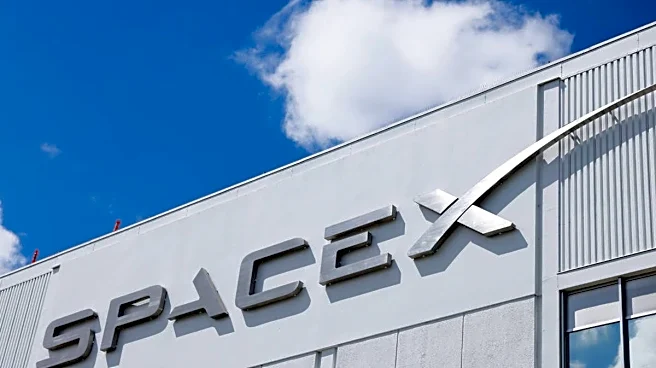
SpaceX, led by CEO Elon Musk, has filed for an initial public offering (IPO) with the U.S. Securities and Exchange Commission, planning to list on the Nasdaq under the ticker 'SPCX'. The company is expected to begin trading in late June 2026. The IPO is anticipated
to be the largest in history, potentially raising $75 billion and valuing the company at approximately $1.75 trillion. SpaceX's S-1 filing reveals detailed information about its business operations, including its diverse technology services such as Starlink, Falcon rockets, and the Dragon spacecraft. The filing also highlights future markets like space tourism and asteroid mining, though these are positioned as long-term goals.
Why It's Important?
The SpaceX IPO is significant as it could reshape the IPO market, potentially revitalizing investor interest in public offerings. The scale of the IPO, with a valuation of $1.75 trillion, positions SpaceX among the largest companies globally, impacting market dynamics and investor strategies. The success of this IPO could influence market sentiment, encouraging other companies to consider public offerings. However, the unique nature of SpaceX's business model means its success may not directly translate to a broader market rebound. The IPO also underscores the growing importance of space exploration and technology in the global economy.
What's Next?
Following the IPO, SpaceX plans to expand its operations, including the development of its Starship for payload transport and the integration of AI technologies through its acquisition of xAI. The company aims to reduce orbital insertion costs significantly, which could revolutionize space travel and satellite deployment. The IPO will also allow SpaceX to fund its ambitious projects, such as space tourism and interplanetary travel. Investors and market analysts will closely watch the IPO's performance, as it could set a precedent for future mega IPOs and influence the strategies of other tech and space companies.