





What's Happening?
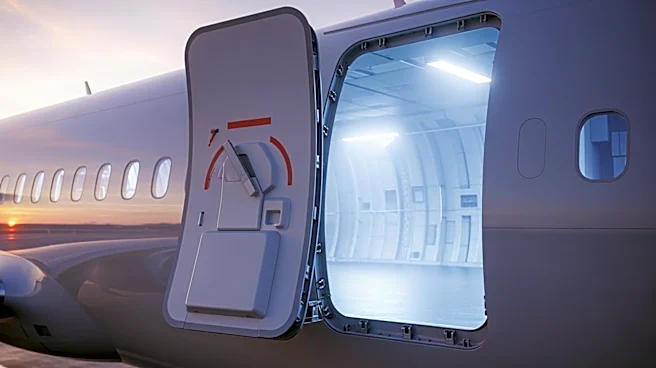
Mammoth Freighters has received supplemental type certificate (STC) approval from the Federal Aviation Administration (FAA) for its Boeing 777-200LRMF cargo modification. This certification allows the converted aircraft to carry a payload of 231,000 pounds
over a range of 4,800 nautical miles. The first delivery is anticipated to be made to Qatar Airways Cargo through Jetran, a Texas-based leasing company. Orders for this converted variant have also been placed by DHL and Ethiopian Airlines. Mammoth is also working on a similar conversion for the 777-300ERMF, which is expected to be certified by the end of 2026. The conversion work is being conducted at Aspire MRO in Fort Worth, Texas, and STS Aviation Services UK Limited in Manchester, England, with plans for further expansion in the Asia-Pacific region.
Why It's Important?
The approval of the 777-200LRMF conversion is significant for the air cargo industry, as it enhances the capacity and range of freighter aircraft available to carriers. This development is particularly crucial given the current challenges in the supply of suitable airframes for conversion, exacerbated by delays in the production of new widebody aircraft like the Boeing 777-9. The conversion program by Mammoth Freighters addresses the demand for efficient cargo transport solutions, which is vital for global logistics and supply chains. The ability to convert existing passenger aircraft into freighters provides a cost-effective alternative to purchasing new aircraft, thereby supporting the growth of air cargo operations.
What's Next?
With the certification of the 777-200LRMF, Mammoth Freighters is poised to accelerate the regulatory approval process for the 777-300ERMF conversion. The company plans to complete the assembly of the first 777-300ERMF by May, with certification expected by the end of 2026. As the demand for air cargo continues to grow, Mammoth's conversion programs are likely to play a critical role in meeting the needs of airlines and logistics companies. The expansion of modification lines in the Asia-Pacific region indicates a strategic move to tap into the growing market for cargo aircraft in that area.