







What's Happening?
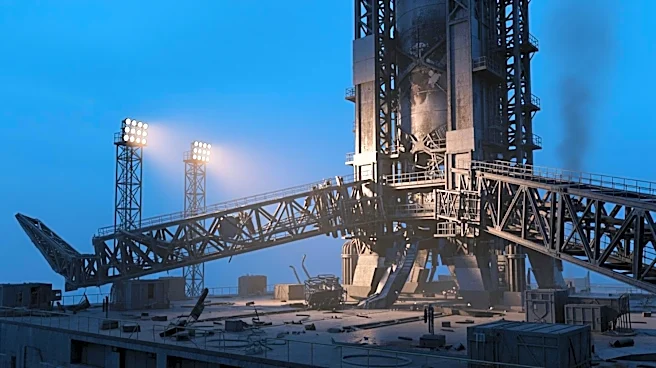
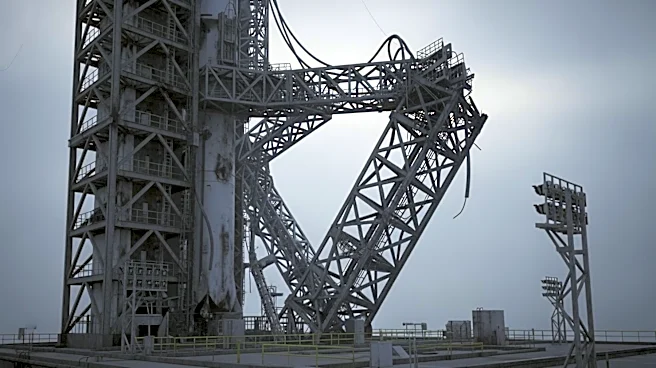
Jeff Bezos' Blue Origin reported that a recent rocket explosion at Cape Canaveral Space Force Station did not damage critical components such as fuel tanks and key parts of the launch pad. The explosion occurred during an engine-firing test of the New
Glenn rocket, which is integral to NASA's Artemis moon program. While a lightning tower and transporter-erector were destroyed, the methane, hydrogen, and oxygen tanks remained intact. The cause of the explosion is under investigation, but Blue Origin's CEO Dave Limp expressed optimism about resuming flights by the end of the year. The New Glenn rocket is crucial for launching NASA's lunar rovers and the Blue Moon lander, which will transport astronauts to the moon.
Why It's Important?
The incident highlights the challenges and risks associated with space exploration and the development of new rocket technologies. Blue Origin's New Glenn rocket is a key component of NASA's Artemis program, which aims to return humans to the moon by 2028. The explosion could delay these plans, impacting NASA's timeline and potentially increasing costs. However, the preservation of critical infrastructure suggests that recovery and resumption of operations might be swift. This event underscores the importance of robust safety measures and contingency planning in the aerospace industry.
What's Next?
Blue Origin will focus on investigating the cause of the explosion and repairing the damaged infrastructure. The company aims to resume test flights by the end of the year, which will be crucial for maintaining the timeline of NASA's Artemis program. Stakeholders, including NASA and other aerospace partners, will closely monitor the situation to assess any potential impacts on upcoming missions. The incident may also prompt a review of safety protocols and risk management strategies in the industry.