







What's Happening?
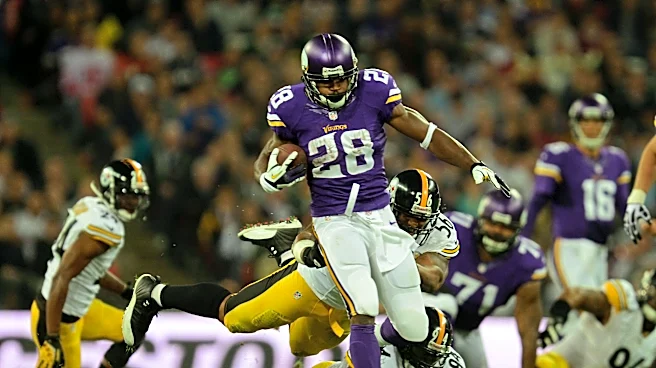
The Minnesota Vikings have announced that Adrian Peterson, a former running back for the team, will be inducted into the Vikings' Ring of Honor during the 2026 season. Peterson, who played ten seasons with the Vikings, is recognized for his outstanding
contributions to the team, including 11,747 rushing yards and 97 touchdowns, the most by any Vikings running back. His 2012 season was particularly notable, as he rushed for 2,097 yards and 12 touchdowns, earning him the NFL MVP award. The induction will see Peterson join other legendary Vikings running backs like Chuck Foreman and Bill Brown. Despite his on-field success, Peterson's career has been marred by off-field issues, including a suspension in 2014 following a felony child abuse charge, which was later reduced to a misdemeanor. More recently, he faced legal troubles related to driving while intoxicated and unlawfully carrying a weapon.
Why It's Important?
Adrian Peterson's induction into the Vikings' Ring of Honor underscores his significant impact on the team and the NFL. His achievements on the field have left a lasting legacy, making him one of the most celebrated players in Vikings history. This recognition not only honors his athletic prowess but also highlights the complex nature of professional sports, where personal conduct can affect public perception. For the Vikings, celebrating Peterson's contributions is a nod to their storied history and a way to inspire current and future players. However, it also raises discussions about how teams and leagues handle the legacies of players with legal and personal controversies.
What's Next?
Adrian Peterson's induction ceremony is expected to take place during the 2026 NFL season, providing an opportunity for fans and the team to celebrate his career. As Peterson becomes eligible for the Pro Football Hall of Fame in 2027, his induction into the Vikings' Ring of Honor could bolster his candidacy. The team and its fans will likely reflect on his contributions and the broader implications of honoring athletes with complex legacies. The NFL and other sports organizations may continue to evaluate how they recognize players who have faced legal issues, balancing their on-field achievements with their off-field conduct.