


What's Happening?
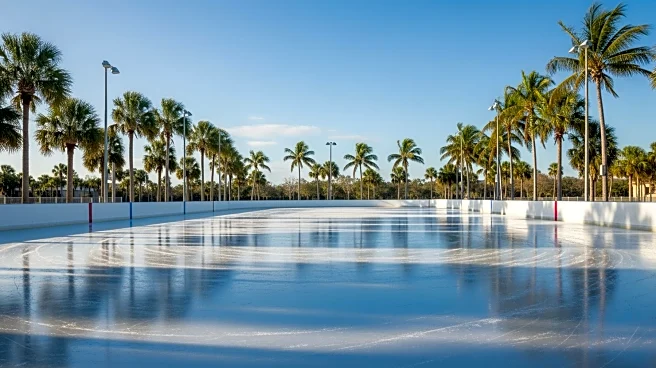
The construction team for the 2026 Navy Federal Credit Union Stadium Series ice rink in Tampa, Florida, is experiencing unexpectedly favorable conditions due to cooler-than-usual weather. Andrew Higgins, NHL senior manager of facilities operations, expressed satisfaction with the low to mid-60s temperatures and reduced humidity, which have facilitated uninterrupted progress on the rink. The rink, located at the Tampa Bay Buccaneers' stadium, is covered by a large, air-conditioned structure to maintain optimal ice conditions for the upcoming game between the Tampa Bay Lightning and Boston Bruins. The cooler weather, with temperatures expected to drop to 41 degrees Fahrenheit by game time, has allowed the NHL to plan the removal of the protective
structure earlier than anticipated.
Why It's Important?
The successful construction of the outdoor rink in Tampa highlights the NHL's ability to adapt to challenging environments, expanding the reach of hockey to non-traditional markets like Florida. This event underscores the growing popularity of hockey in warmer climates and the league's commitment to hosting games in diverse locations. The favorable weather conditions not only ensure a high-quality playing surface but also enhance the fan experience by reducing potential weather-related disruptions. This development could encourage the NHL to consider more outdoor games in similar climates, potentially increasing the sport's visibility and fan base in the southern United States.
What's Next?
With the rink construction proceeding smoothly, the focus will shift to the game itself, scheduled for Sunday. The NHL will monitor weather conditions closely to ensure the ice remains in optimal condition for both the practice sessions and the game. The successful execution of this event could lead to more frequent outdoor games in warmer regions, prompting the NHL to refine its strategies for managing ice quality in diverse climates. Stakeholders, including teams, sponsors, and fans, will be keenly observing the outcome, which could influence future decisions regarding the location and frequency of outdoor games.