



What's Happening?
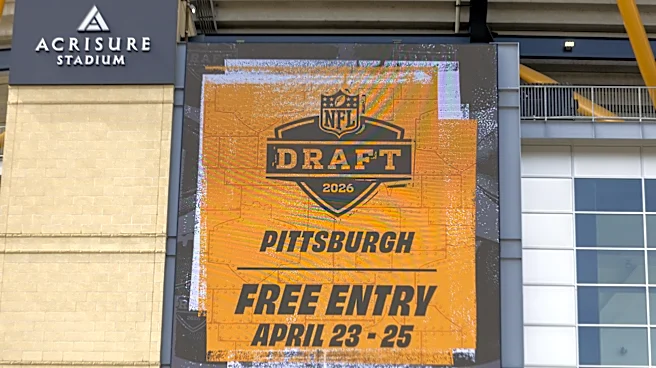
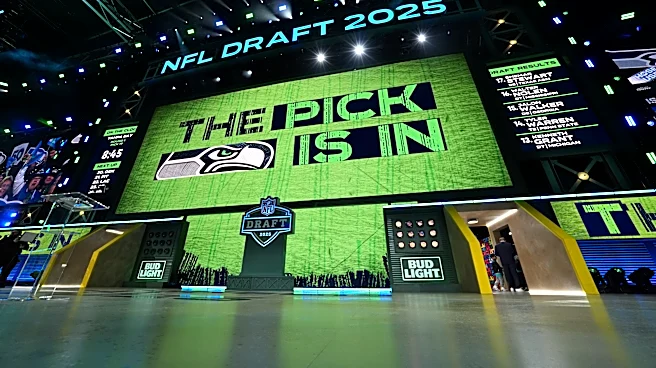
The NFL's decision to reduce the time between first-round draft picks from 10 minutes to 8 minutes has led to significant criticism of ESPN's broadcast coverage. During the 2026 NFL Draft, viewers, including former NFL player Mitchell Schwartz, expressed
frustration over ESPN's delayed coverage, which lagged behind real-time events. The change, approved by the league in December, was intended to streamline the draft process but has resulted in complaints about the broadcast's inability to keep pace. Fans took to social media to voice their dissatisfaction, noting that picks were being leaked online before being announced on television. The reduction in time has also raised concerns among general managers, who feel rushed in making decisions. Despite these issues, the time limits for rounds 2-7 remain unchanged.
Why It's Important?
The criticism of ESPN's draft coverage highlights the challenges faced by broadcasters in adapting to new time constraints. The NFL's decision to shorten the time between picks was aimed at making the draft more efficient, but it has inadvertently created a disconnect between live events and broadcast coverage. This situation underscores the importance of timely and accurate media coverage in maintaining viewer engagement and trust. The delay in ESPN's coverage could impact its reputation and viewership, as fans may turn to alternative sources for real-time updates. Additionally, the pressure on general managers to make quick decisions could affect team strategies and player selections, potentially influencing the competitive landscape of the league.
What's Next?
Moving forward, ESPN and other broadcasters may need to adjust their production strategies to better align with the new draft timing. This could involve streamlining commercial breaks and enhancing coordination with on-the-ground reporters to ensure timely updates. The NFL may also consider feedback from teams and broadcasters to evaluate the effectiveness of the time reduction and its impact on the draft process. As teams adapt to the new timing, they may need to refine their decision-making processes to ensure they can make informed choices within the shortened timeframe. The league's response to these challenges will be crucial in determining the future format of the draft.