


What's Happening?
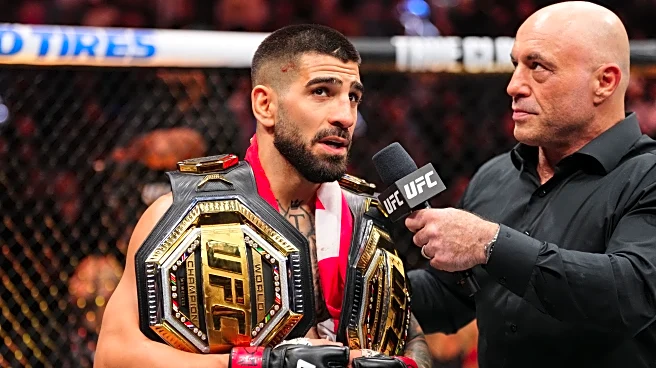
UFC CEO Dana White has announced a six-fight card for the upcoming Freedom Fights 250, scheduled to take place on June 14 on the White House South Lawn in Washington, D.C. The event will be headlined by a lightweight title fight between current champion
Ilia Topuria and interim champion Justin Gaethje. Additionally, Alex Pereira and Ciryl Gane will compete for the interim heavyweight title in the co-main event. The card, which does not feature high-profile fighters like Jon Jones or Conor McGregor, has been met with mixed reactions regarding its lineup and significance. ESPN reporters have analyzed the card, noting that while it may not rank among the UFC's best, it still features compelling matchups, particularly with Topuria's return to the spotlight.
Why It's Important?
The announcement of the White House fight card is significant as it highlights the UFC's ongoing efforts to maintain its presence in the mainstream sports arena. The choice of venue, the White House South Lawn, adds a unique political and cultural dimension to the event, potentially attracting a broader audience. The card's composition, featuring fighters like Topuria and Gaethje, underscores the UFC's current challenge of building new stars in the absence of long-time draws like McGregor and Jones. The event could serve as a platform for emerging fighters to gain recognition and for the UFC to demonstrate its ability to stage high-profile events in unconventional settings.
What's Next?
As the event approaches, the UFC will likely ramp up promotional efforts to generate interest and ensure a successful turnout. The outcomes of the fights, particularly the main event between Topuria and Gaethje, could have significant implications for the fighters' careers and the UFC's future matchmaking. A victory for Topuria could position him for a high-stakes bout against Islam Makhachev, potentially setting up one of the biggest fights of the year. Meanwhile, the UFC will continue to navigate its star-building strategy, seeking to elevate fighters who can capture the public's imagination and sustain the sport's growth.
Beyond the Headlines
The decision to host a UFC event at the White House reflects a broader trend of sports intersecting with political and cultural venues, potentially influencing public perception of both the sport and the venue. This event could set a precedent for future collaborations between sports organizations and political institutions, highlighting the role of sports as a unifying force. Additionally, the absence of female fighters on the card has sparked discussions about gender representation in the UFC, pointing to ongoing challenges in achieving equity within the sport.