


What's Happening?
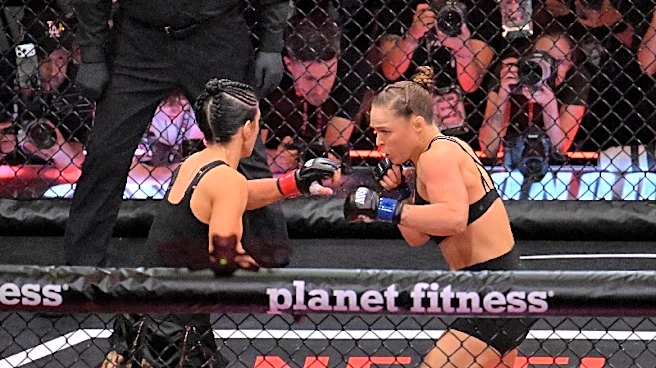
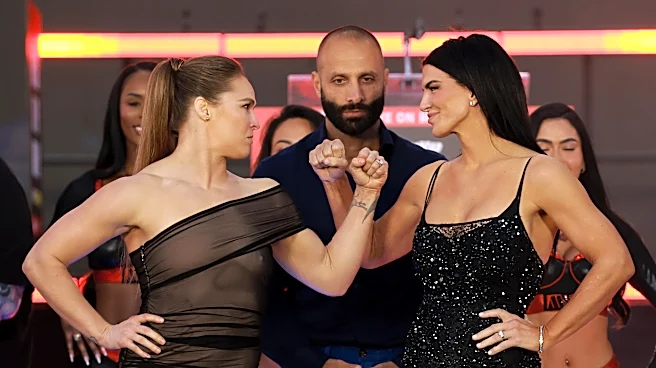
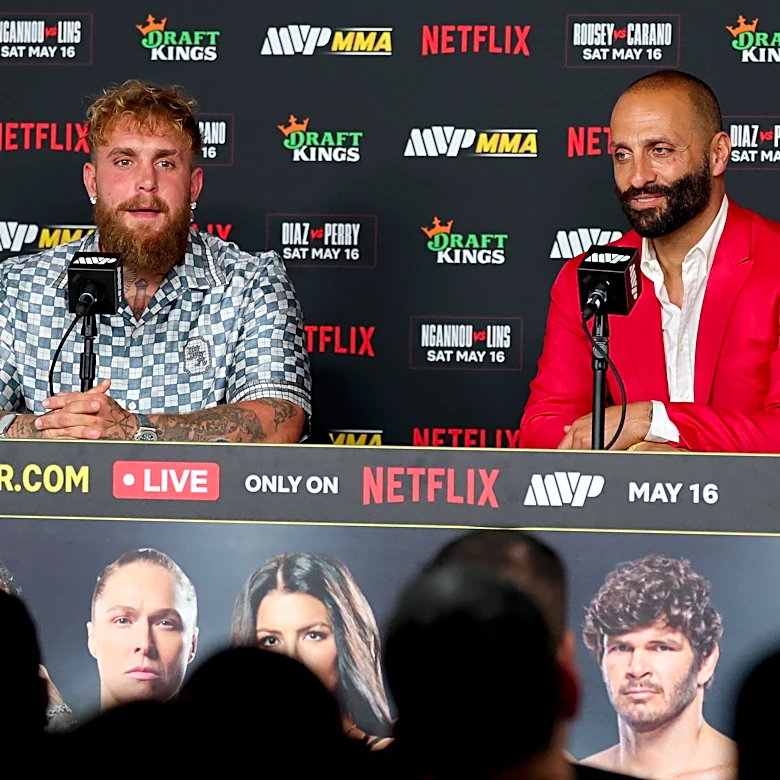
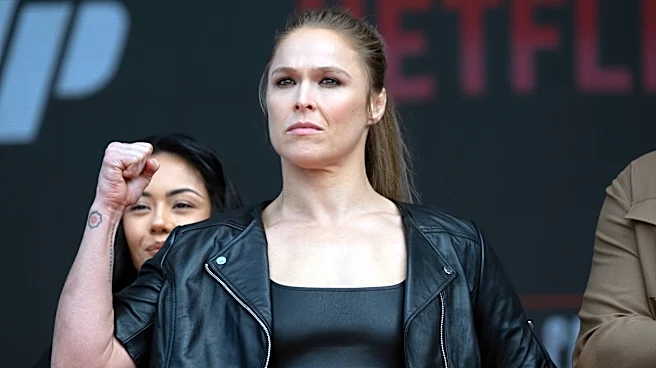
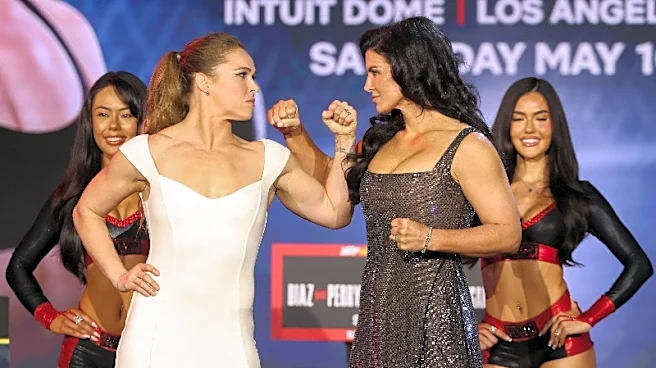
Ronda Rousey has announced her retirement from mixed martial arts following a decisive victory over Gina Carano in a Netflix-hosted MMA event. The fight, which took place on Saturday, ended in just 17 seconds with Rousey securing a first-round submission
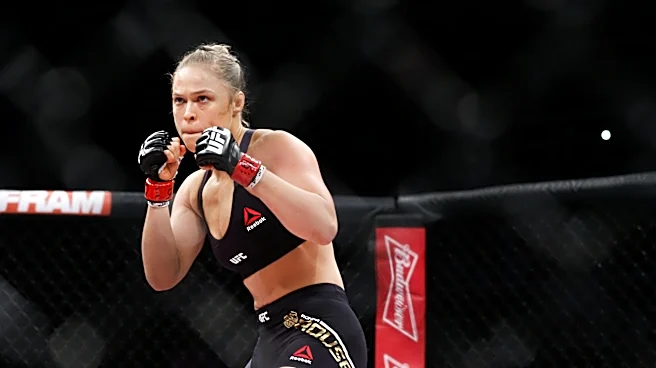
win. This match was highly anticipated as Rousey had previously stated her intention for it to be her final fight. Despite the possibility of a trilogy fight, Rousey expressed satisfaction with her career's conclusion, stating, 'There's no way I could've ended it better than this.' Rousey, who began her MMA career with a perfect 12-0 record and became the first UFC women's bantamweight champion, had been away from the sport for nearly a decade following losses to Holly Holm and Amanda Nunes in 2015 and 2016.
Why It's Important?
Rousey's retirement marks the end of an era in women's MMA, as she was a pivotal figure in bringing the sport to mainstream attention. Her career achievements have inspired a new generation of female fighters and expanded the audience for women's sports. Rousey's decision to retire after a successful comeback fight underscores her influence and the legacy she leaves behind. Her departure may impact the sport's dynamics, as she was a major draw for audiences and a key figure in the UFC's promotion of women's divisions. The event also highlights the growing trend of streaming platforms like Netflix entering the sports broadcasting arena, potentially altering how audiences engage with live sports.
What's Next?
With Rousey's retirement, the focus may shift to other emerging talents in women's MMA who can fill the void left by her departure. The UFC and other organizations might look to capitalize on the increased visibility and interest in women's MMA that Rousey helped generate. Additionally, Rousey has expressed interest in focusing on her personal life, including starting a family, which may lead to her involvement in other ventures outside of fighting, such as acting or sports commentary. The success of the Netflix event could encourage more collaborations between streaming services and sports organizations, potentially changing the landscape of sports broadcasting.