







What's Happening?
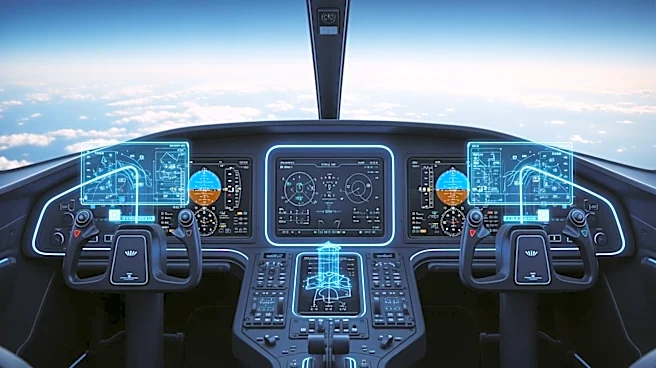
Merlin, a U.S.-based start-up, has announced the rollout of its new autonomous flight technology, 'Merlin Pilot for Commercial Cargo,' designed for large commercial aircraft. This system, which incorporates artificial intelligence, is intended to manage
all phases of flight, potentially enhancing aviation safety by reducing human error. The technology allows for augmented operations, enabling a single pilot to manage aircraft typically requiring two pilots. Merlin's system is compatible with various aircraft, including Airbus and Boeing models, and is designed to integrate into both existing and new cargo aircraft. The company has tested its technology extensively, including on a Cessna Grand Caravan, and is also developing systems for military aircraft like the Lockheed Martin C-130J. Merlin became publicly traded in March 2026, securing $200 million in funding, followed by an additional $80 million in April.
Why It's Important?
The introduction of Merlin's autonomous flight technology represents a significant advancement in aviation, potentially transforming how commercial and military aircraft are operated. By reducing reliance on human pilots, the technology could lower operational costs and increase safety by minimizing human-related errors. This development is particularly relevant as the aviation industry seeks to address pilot shortages and improve efficiency. The technology's compatibility with major aircraft manufacturers like Airbus and Boeing suggests a broad potential market, which could lead to widespread adoption. Additionally, the integration of AI in aviation aligns with broader trends towards automation and digital transformation across industries.
What's Next?
Merlin's technology is poised to undergo further testing and refinement as it seeks to secure regulatory approvals necessary for widespread adoption. The company may also pursue additional partnerships with aircraft manufacturers and airlines to expand its market presence. As the technology gains traction, it could prompt regulatory bodies to update guidelines and standards for autonomous flight operations. The success of Merlin's system could also encourage other companies to invest in similar technologies, potentially accelerating innovation in the aviation sector.