







What's Happening?
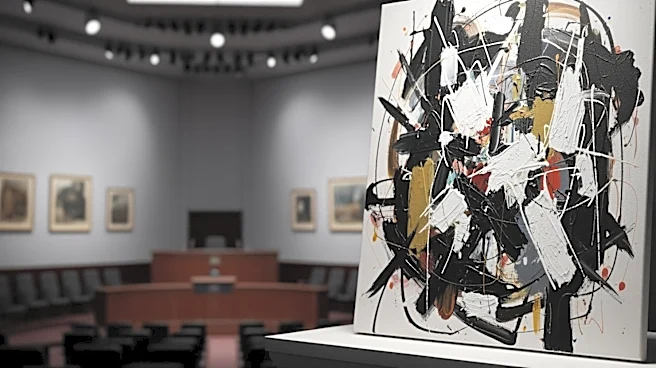
Sotheby's recently attempted to auction a major Jackson Pollock painting, Number 19, 1951, at its Manhattan headquarters. The painting, owned by Pace Gallery founder Arne Glimcher, was listed with an asking price of $50 million. Despite the high-profile
nature of the sale, which included Sotheby's star auctioneer Oliver Barker flown in from London, the auction failed to attract enough bidders, leading to its collapse. This event comes amid news that Pace Gallery is downsizing, cutting 50 artists and estates from its roster and laying off 50 staff members. The art world is facing significant changes, with many galleries struggling to adapt to a rapidly evolving market.
Why It's Important?
The failed auction of a high-value Pollock painting highlights ongoing challenges in the art market, particularly for mega-galleries like Pace. The inability to secure bidders for such a significant piece suggests potential shifts in collector interest or financial constraints among buyers. This development may signal broader issues within the art market, where traditional gallery models are being questioned. The downsizing of Pace Gallery further underscores the pressures facing large art institutions, as they navigate a landscape that is increasingly competitive and financially demanding. The outcome of this auction could influence future sales strategies and the valuation of high-end art pieces.
What's Next?
The art market may see a reevaluation of strategies by auction houses and galleries in response to this event. Sotheby's and other major players might need to reassess their approach to private auctions and the pricing of high-value artworks. Additionally, galleries like Pace may continue to streamline operations and focus on more sustainable business models. The art community will likely watch closely for any shifts in collector behavior or changes in the market dynamics that could affect future auctions and gallery operations.