
What's Happening?
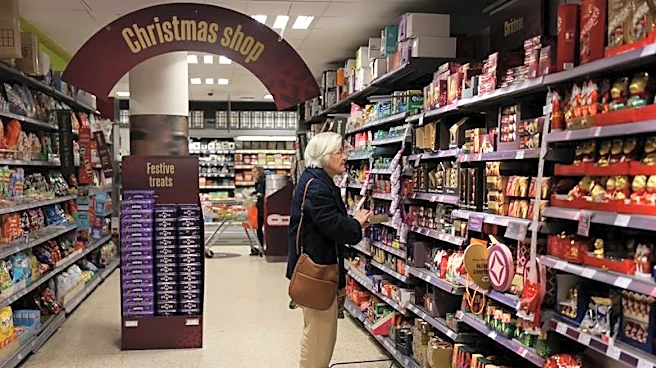
Sainsbury's CEO Simon Roberts has urged the government to address rising energy costs that are impacting farmers, food producers, and retailers. He emphasized that these costs are a significant driver
of food inflation, exacerbated by the ongoing conflict in the Middle East. Roberts highlighted that energy expenses are crucial in the food supply chain, affecting everything from heating polytunnels for crops to refrigeration and transportation. Despite the UK entering its domestic growing season, which has so far prevented food availability issues, the high energy costs remain a concern. Sainsbury's has reported a 4.3% increase in annual sales, but the company warns that profits could be affected by the conflict's impact on consumer spending and operational costs.
Why It's Important?
The call for government intervention by Sainsbury's CEO underscores the broader economic challenges posed by rising energy costs, which could lead to increased food prices. This situation affects not only the retail sector but also consumers who are already dealing with inflationary pressures. The potential for higher food prices could strain household budgets further, especially as the conflict in the Middle East continues to create economic uncertainty. The retail sector, including companies like Sainsbury's and WH Smith, is already feeling the impact, with some businesses adjusting profit forecasts due to these pressures. Addressing energy costs could help stabilize food prices and support economic resilience.
What's Next?
Sainsbury's is continuing to invest in automation and technology to improve efficiency and reduce costs. The company plans to open new supermarkets and convenience stores, indicating a strategy to expand its market presence despite current challenges. The government may consider extending energy cost relief to the food sector, similar to measures taken for other energy-intensive industries. The ongoing conflict in the Middle East will likely continue to influence economic conditions, and businesses will need to adapt to these uncertainties. Stakeholders in the food supply chain may advocate for more comprehensive support to mitigate the impact of rising costs.