
What's Happening?
The Consumer Electronics Show (CES) 2026 is set to showcase significant advancements in automotive technology, with a focus on flying cars and artificial intelligence (AI) integration. The event, held
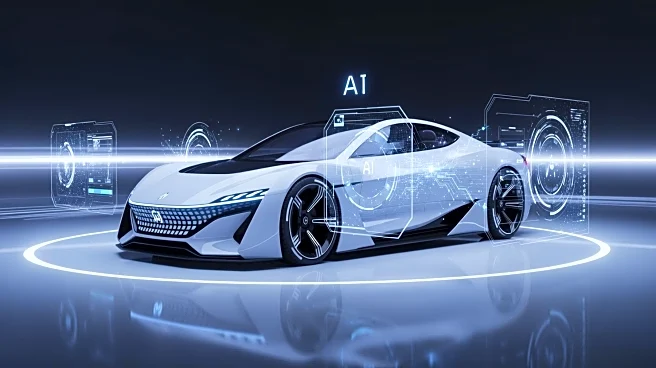
annually in Las Vegas, has become a platform for automakers and tech companies to unveil cutting-edge innovations. This year, the spotlight is on flying car concepts, with at least one company expected to announce a roadmap for public air taxi flights. Additionally, improvements in conversational AI within vehicles are anticipated, allowing for more complex and predictive tasks. The show will also feature advancements in autonomous driving software and hardware, including radar, camera, sonar, and lidar technologies. These developments reflect a shift from traditional vehicle debuts to a focus on the technologies that enhance vehicle functionality and user experience.
Why It's Important?
The innovations presented at CES 2026 have the potential to significantly impact the automotive industry and urban mobility. The introduction of flying cars and air taxis could revolutionize transportation, offering new solutions for urban congestion and reducing travel times. The integration of AI in vehicles promises to enhance driver experience and safety, with more intuitive and responsive systems. These advancements could lead to increased consumer demand for high-tech vehicles, influencing market trends and driving further investment in automotive technology. Additionally, the development of autonomous driving technologies could pave the way for safer and more efficient transportation systems, potentially reducing traffic accidents and improving road safety.
What's Next?
Following CES 2026, the automotive industry is likely to see increased collaboration between automakers, tech companies, and urban planners to develop the necessary infrastructure for flying cars and air taxis. Regulatory frameworks will need to be established to ensure the safe integration of these vehicles into existing transportation systems. The advancements in AI and autonomous driving technologies may lead to further research and development, with companies seeking to enhance the capabilities and reliability of these systems. As these technologies become more mainstream, consumer adoption and acceptance will be critical to their success.