





What's Happening?
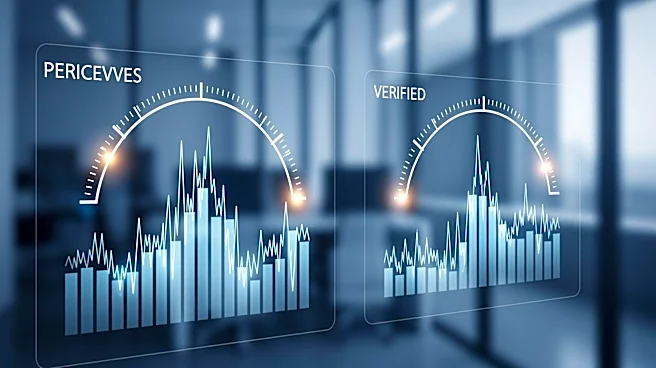
A new report from Workera highlights a significant gap between verified AI skills and self-reported proficiency among employees. The 2026 AI Skills Enterprise Benchmark Report, based on 88,753 assessments, reveals that while employees often report high proficiency in
AI skills, their verified capabilities are much lower. Skills with a low technical barrier, such as Data Storytelling Essentials, show stronger scores, whereas more technically demanding skills like Deep Learning Fundamentals average lower scores. This discrepancy poses a risk for HR leaders who rely on self-reported data to assess workforce readiness.
Why It's Important?
The gap between self-reported and verified AI skills is crucial for organizations as they increasingly rely on AI to drive business processes. If employees lack the necessary skills to effectively implement AI solutions, it could lead to inefficiencies and project delays. This situation underscores the importance of accurate skills assessment and targeted training programs. Organizations that fail to address this gap may find themselves at a competitive disadvantage, as they are unable to fully leverage AI technologies. For HR leaders, this highlights the need for robust skills verification processes and continuous employee development.
What's Next?
Organizations are likely to invest more in targeted training programs to bridge the skills gap. The report suggests that certain skills, such as Data Visualization and Storytelling, respond well to training, with significant improvements observed. Companies may adopt a measurement-first approach, assessing employees' skills and providing personalized development paths. This strategy could help ensure that employees are equipped to handle advanced AI systems, thereby enhancing organizational efficiency and innovation. HR leaders will need to prioritize skills verification and development to maintain a competitive edge in the rapidly evolving AI landscape.