




What's Happening?
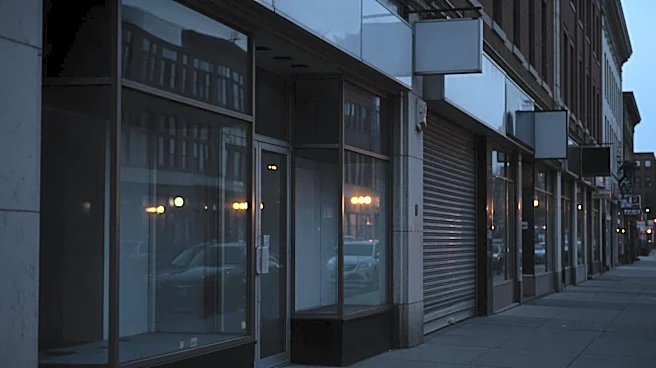
A recent report from the New York City comptroller highlights that approximately 15,700 storefronts across the city remain vacant, a figure that surpasses pre-COVID levels. This persistent vacancy rate is a significant concern for the city's economic
recovery and urban landscape. The report suggests that while some areas have seen a resurgence in business activity, many neighborhoods continue to struggle with high vacancy rates, impacting local economies and community vibrancy. The data indicates that the recovery of retail spaces is uneven, with some districts recovering faster than others.
Why It's Important?
The high number of vacant storefronts in New York City has broad implications for the local economy and community well-being. Vacant properties can lead to decreased foot traffic, affecting surrounding businesses and potentially leading to further closures. This situation poses challenges for economic recovery efforts post-pandemic, as retail spaces are crucial for job creation and economic activity. Additionally, prolonged vacancies can lead to urban decay, affecting property values and community morale. Addressing these vacancies is essential for revitalizing neighborhoods and supporting small businesses, which are vital to the city's economic fabric.
What's Next?
Efforts to address the high vacancy rates may include policy interventions and incentives to attract businesses back to these spaces. City officials and stakeholders might consider strategies such as tax incentives, grants, or easing regulatory burdens to encourage new businesses to open. Additionally, there may be a push for innovative uses of these spaces, such as pop-up shops or community hubs, to temporarily fill vacancies and stimulate local economies. Monitoring the effectiveness of these strategies will be crucial in ensuring a balanced and sustainable recovery for New York City's retail sector.