

What's Happening?
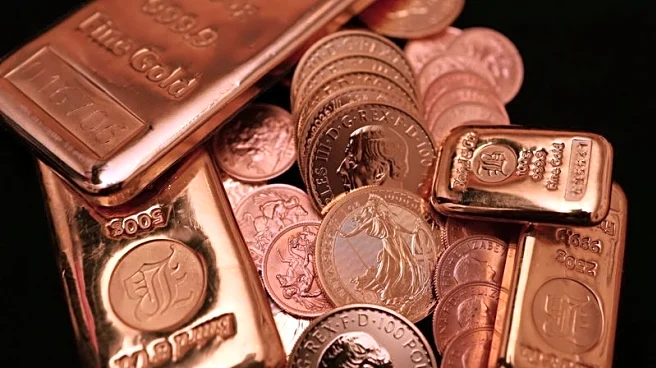
Gold and platinum prices have surged to record levels, driven by geopolitical tensions, changes in U.S. monetary policy, and a weakening dollar. Gold reached nearly $4,500 per ounce, marking a 70% increase in 2025, while platinum hit a record $2,323 per ounce. The rise in gold prices is attributed to investors seeking safe-haven assets amid economic uncertainty, exacerbated by the Federal Reserve's interest rate cuts. Platinum's increase is fueled by industrial demand, particularly after European policymakers delayed a ban on combustion engine cars, extending the use of platinum-heavy catalytic converters. Geopolitical tensions, such as the U.S. naval blockade of Venezuelan oil tankers, have further contributed to the demand for precious metals.
Why It's Important?
The surge in precious metal prices reflects broader economic and geopolitical uncertainties. As investors move away from fiat currencies, the demand for hard assets like gold and platinum increases, impacting global financial markets. This trend indicates a shift towards asset diversification amid fears of inflation and currency devaluation. The rise in platinum prices also highlights the ongoing demand for industrial metals, influenced by policy changes and supply constraints. These developments have significant implications for investors, central banks, and industries reliant on these metals.
What's Next?
Analysts predict that gold prices could reach $5,000 by late 2026, as the demand for safe-haven assets continues. The ongoing geopolitical tensions and economic policies will likely sustain the high demand for precious metals. Investors and central banks are expected to continue diversifying their portfolios, potentially leading to further price increases. The market will closely watch policy decisions and geopolitical developments that could influence the supply and demand dynamics of these metals.