






What's Happening?
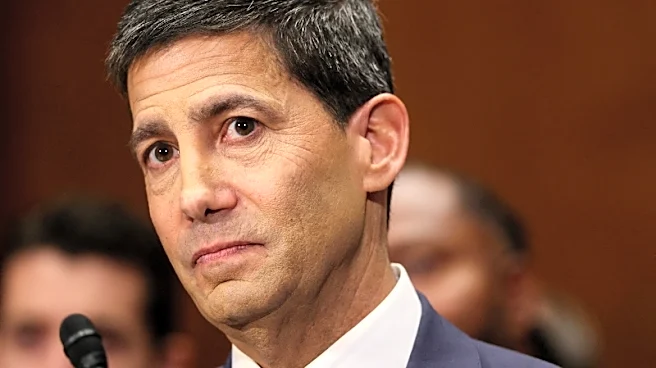
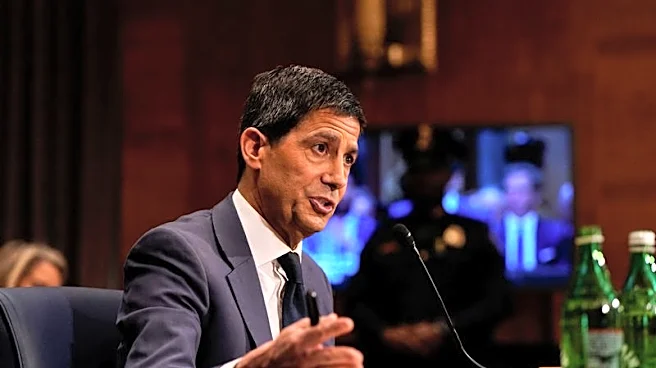
The Federal Reserve, under the leadership of Chair Jerome Powell, has decided to maintain the federal funds rate at 3.5% to 3.75% during its last meeting before Kevin Warsh takes over as chair. This decision comes amid significant internal dissent within
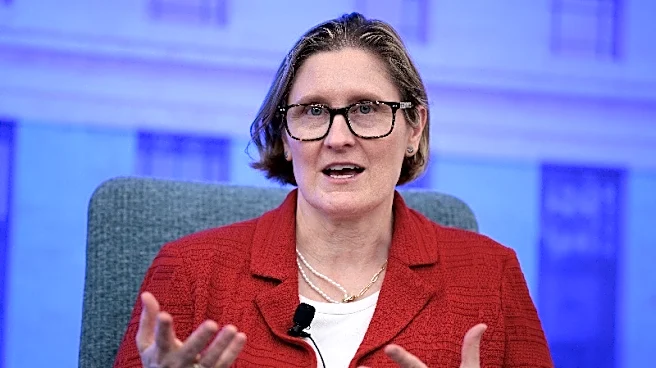
the Federal Open Market Committee (FOMC), with an 8-4 split decision, the highest since 1992. The Fed cited solid economic growth but noted persistent inflation driven by global energy and gasoline price spikes. The committee aims to achieve maximum employment and a 2% inflation rate, while remaining attentive to geopolitical uncertainties, particularly developments in the Middle East. The Fed's decision reflects a cautious approach to monetary policy, balancing the need to support economic growth with the risks of inflation.
Why It's Important?
The Fed's decision to hold interest rates steady highlights the challenges of navigating economic policy amid geopolitical tensions and inflationary pressures. The internal dissent within the FOMC indicates differing views on how best to manage these challenges. The decision impacts financial markets, influencing investment strategies and economic forecasts. For businesses and consumers, stable interest rates can provide some predictability, but the ongoing inflation concerns may affect purchasing power and cost of living. The Fed's cautious stance suggests a focus on data-driven policy adjustments, which could influence future economic conditions and the central bank's ability to respond to emerging risks.