





What's Happening?
On May 20, stargazers in the northeastern U.S. will have the opportunity to witness a celestial event as Jupiter aligns with the waxing crescent moon after sunset. The two celestial bodies will be visible for several hours, with Jupiter shining brightly
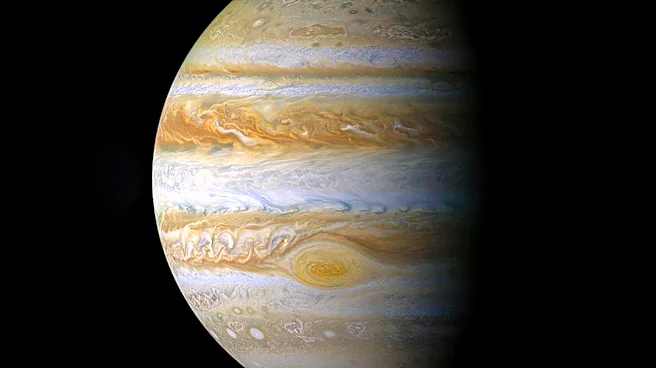
to the lower right of the moon. Venus will also be visible near the horizon, adding to the spectacle. Observers with telescopes can view Jupiter's cloud bands and its largest moons, as well as the moon's craters and ancient lava plains. The event offers a chance for astronomy enthusiasts to explore the night sky and observe the movement of these celestial bodies.
Why It's Important?
This celestial event provides a unique opportunity for both amateur and professional astronomers to observe and study the night sky. Such events can inspire interest in astronomy and science, encouraging educational activities and public engagement. For the general public, it offers a chance to connect with the natural world and appreciate the beauty of the cosmos. The visibility of Jupiter, Venus, and the moon together is a rare occurrence that can enhance public interest in space exploration and observation.
What's Next?
Following this event, Venus will continue to be a prominent feature in the night sky over the coming months. Stargazers are encouraged to use tools like the Time and Date skywatching tracker to plan their observations. The event also serves as a reminder of the ongoing opportunities to explore the night sky, with various celestial events occurring throughout the year. Astronomy clubs and educational institutions may organize viewing events to capitalize on public interest.