







What's Happening?
The Federal Reserve's recent policy statement has sparked internal dissent among its officials due to the inclusion of the word 'additional,' which suggests a potential easing bias in future interest rate decisions. The Fed's latest guidance indicates
that lower interest rates might be the only possibility moving forward, as it considers 'additional adjustments to the target range for the federal funds rate.' This has led to objections from Fed presidents Lorie Logan, Beth Hammack, and Neel Kashkari, who did not support the inclusion of an easing bias at this time. The dissent comes amid a backdrop of economic challenges, including the ongoing US-Israeli war with Iran, which has kept global oil prices high and contributed to inflationary pressures. The Fed's forward guidance plays a crucial role in influencing financial conditions and achieving its maximum employment and price stability goals.
Why It's Important?
The internal dissent within the Federal Reserve highlights the complexities and challenges of monetary policy in the current economic environment. The Fed's guidance on interest rates is a critical tool for managing economic stability, and any perceived bias towards easing could have significant implications for financial markets and the broader economy. The disagreement among Fed officials underscores the difficulty of balancing the need to support economic growth with the risk of exacerbating inflation. As the Fed navigates these challenges, its decisions will have far-reaching effects on consumer borrowing costs, business investment, and overall economic confidence. The outcome of this internal debate could influence future monetary policy and the Fed's ability to respond effectively to changing economic conditions.
What's Next?
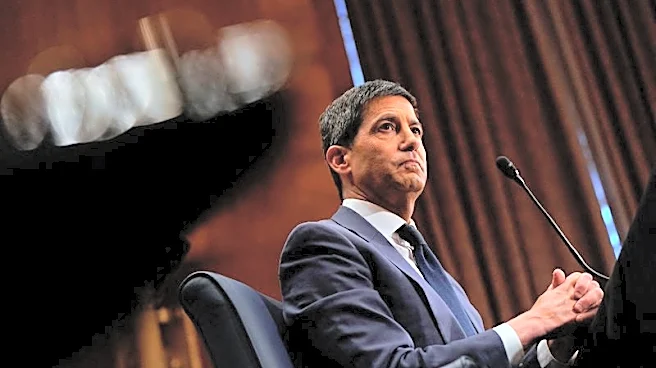
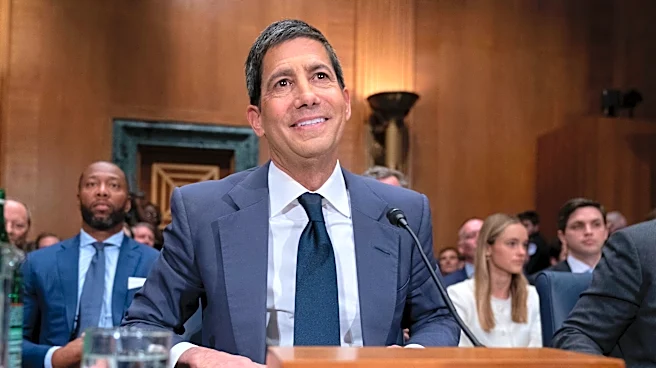
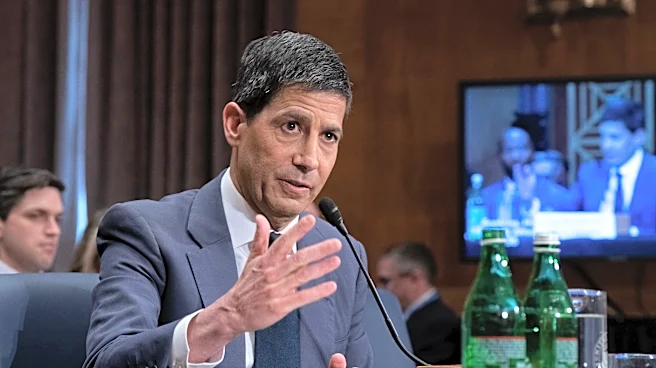
With Kevin Warsh set to take over as Fed chair by the next meeting in mid-June, the direction of future interest rate policy remains uncertain. Warsh's leadership could bring a shift in the Fed's approach, particularly if he advocates for rate cuts, as suggested by his nomination by President Trump. However, the existing leadership's high bar for rate cuts indicates that any changes will be carefully considered. The Fed's upcoming meetings and statements will be closely watched for further signals on interest rate policy, as stakeholders seek clarity on the Fed's strategy in addressing economic challenges. The ongoing geopolitical tensions and their impact on inflation and economic growth will also be key factors in shaping the Fed's decisions.