




What's Happening?
Brazil's iron ore producer Vale has entered into a 25-year agreement with Shandong Shipping Corporation to construct the world's first transoceanic vessels powered by ethanol. This initiative represents a significant advancement in cleaner shipping practices.
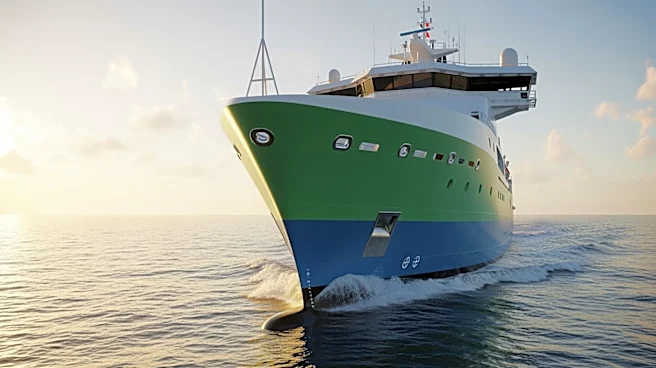
The two Guaibamax-class ships, each with a capacity of 325,000 tonnes of iron ore, are scheduled for delivery in 2029. These vessels will incorporate rotor sails to harness wind energy and feature improved engines for enhanced fuel efficiency. Vale's navigation director, Rodrigo Bermelho, emphasized the company's commitment to reducing emissions across its operations, including maritime transport. The agreement is timely, given the disruptions in global oil markets that have heightened interest in alternative fuels and flexible energy systems in shipping. Vale currently operates approximately 50 Guaibamax vessels and has chartered 10 dual-fuel ships from Shandong, capable of running on methanol and conventional fuel, with delivery expected between 2027 and 2029.
Why It's Important?
The agreement between Vale and Shandong Shipping Corporation marks a pivotal shift towards sustainable maritime transport, potentially setting a precedent for the shipping industry. As global oil market disruptions continue, the adoption of ethanol-powered vessels could reduce reliance on traditional fossil fuels, thereby decreasing emissions and environmental impact. This move aligns with broader industry trends towards fuel diversification and resilience against geopolitical tensions affecting energy supplies. The initiative could influence other shipping companies to explore alternative fuels, contributing to a more sustainable global shipping industry. Additionally, Vale's strategy to convert existing vessels to ethanol further underscores the company's commitment to cleaner energy solutions, which could enhance its reputation and operational efficiency.
What's Next?
Vale's focus on ethanol-powered vessels may prompt other industry players to consider similar innovations, potentially leading to increased investment in alternative fuel technologies. As the delivery of these vessels approaches, stakeholders will likely monitor the performance and efficiency of ethanol as a maritime fuel. Regulatory bodies may also take interest in the environmental benefits of such initiatives, possibly influencing future shipping regulations. The success of Vale's ethanol-powered vessels could encourage further research and development in renewable energy sources for maritime transport, fostering a shift towards more sustainable practices across the industry.