



What's Happening?
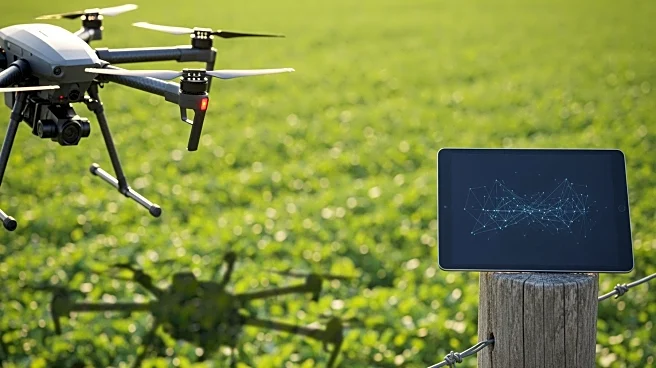
Precision agriculture is transforming the agricultural labor market by shifting demand from manual labor to technical and analytical roles. This technological advancement involves the use of digital systems and automated machinery, which require skilled technicians for installation, calibration, and maintenance. The U.S. Bureau of Labor Statistics reported that approximately 36,830 farm equipment mechanics and service technicians were employed in 2023, but there is a noted shortage of qualified technicians. This shortage could lead to longer wait times for equipment maintenance, potentially causing significant losses for farmers during critical planting and harvest periods. The adoption of precision agriculture varies across the U.S., with the Midwest
showing the highest usage due to its large-scale row-crop systems. However, states like California, with labor-intensive specialty crops, also show significant adoption due to high land and labor costs.
Why It's Important?
The shift towards precision agriculture is crucial as it addresses rising labor costs and enhances production efficiency. However, the shortage of skilled technicians poses a challenge, potentially increasing the cost of adopting and maintaining these technologies. This situation highlights the need for workforce development to support the growing demand for technical skills in agriculture. The correlation between precision agriculture adoption and technician employment and wages suggests that while there is a response to the demand for skilled labor, it may not be sufficient to meet industry needs. This could impact the agricultural sector's ability to fully leverage technological advancements, affecting productivity and profitability.
What's Next?
To address the technician shortage, there may be increased efforts in workforce development and training programs to build a skilled labor pool capable of supporting precision agriculture technologies. This could involve partnerships between educational institutions, industry stakeholders, and government agencies to create pathways for training and employment. Additionally, as precision agriculture continues to evolve, there may be further innovations in technology that could alter labor demands, necessitating ongoing adaptation in workforce strategies.
Beyond the Headlines
The adoption of precision agriculture not only impacts labor dynamics but also has broader implications for environmental sustainability. By enabling more precise application of inputs like fertilizers and pesticides, these technologies can reduce waste and minimize environmental impact. This aligns with broader agricultural goals of sustainability and resource conservation. Furthermore, the shift in labor demand towards technical skills may influence educational priorities and career pathways in rural communities, potentially reshaping local economies and demographics.