








What's Happening?
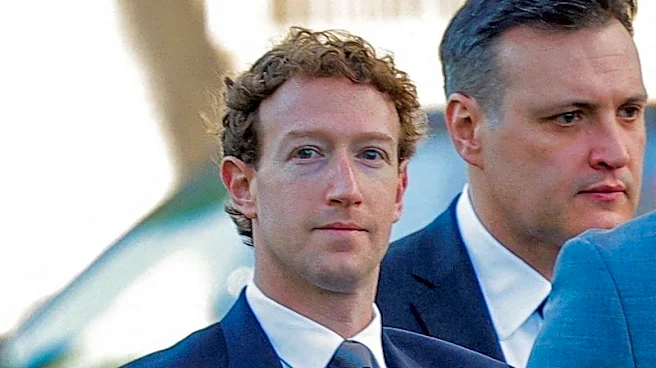
Meta CEO Mark Zuckerberg has admitted to making mistakes during the company's recent AI transformation. In an internal memo, Zuckerberg addressed the challenges faced during the restructuring process that affected approximately 8,000 employees, representing
about 10% of Meta's global workforce. The restructuring involved laying off a significant number of employees and reallocating 7,000 staff members to AI-related roles. Zuckerberg emphasized the complexity of these changes and expressed a commitment to providing stability amid ongoing organizational shifts. He assured employees that there would be no further company-wide layoffs in 2026 and highlighted efforts to find new roles for those affected by the restructuring. Meta has declined to comment on the memo.
Why It's Important?
The acknowledgment of mistakes by Zuckerberg highlights the challenges faced by major tech companies in adapting to rapid advancements in artificial intelligence. Meta's restructuring reflects a broader industry trend where companies are increasingly focusing on AI-driven innovations. The impact of these changes is significant, as it affects talent distribution, operational practices, and project execution within the tech industry. For employees, the restructuring brings uncertainty, but Zuckerberg's assurance of no further layoffs this year may provide some relief. The situation underscores the delicate balance companies must maintain between innovation and workforce stability.
What's Next?
Meta plans to continue its focus on AI initiatives, with Zuckerberg outlining higher budgets for team-building activities and a large-scale hackathon scheduled for July. The company also intends to scale back widened manager oversight, potentially allowing for more flexibility and innovation within teams. As Meta navigates these changes, the tech industry will be watching closely to see how the company manages its workforce and adapts to the evolving AI landscape. Stakeholders, including employees and investors, will be keen to see how these strategic decisions impact Meta's long-term growth and competitiveness.