


What's Happening?
GrainCore Dynamics, a leader in agricultural technology, has introduced its new autonomous agriculture ecosystem at the Frontier Innovation Summit 2026 in Mountain View, California. The company, co-founded by Jiang Zhang, focuses on integrating advanced
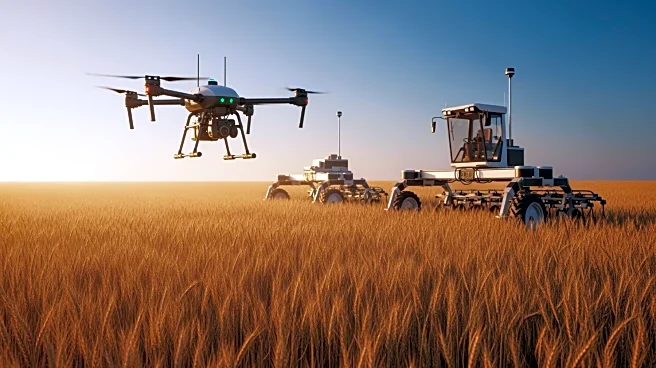
robotics with practical agronomy to address the challenges faced by farmers globally. The ecosystem includes the P100S Heavy-Lift UAV, a precision aerial platform designed to enhance farm management through efficient resource use and waste reduction. Additionally, the company showcased its AI-Driven Plant Factory Systems, which support high-density vertical farming by managing climate control and nutrient delivery. This system is powered by environmental AI, aiming to stabilize yields and reduce unpredictability in indoor agriculture. GrainCore Dynamics emphasizes the importance of listening to farmers' needs and aims to provide reliable tools to support agricultural innovation.
Why It's Important?
The introduction of GrainCore Dynamics' autonomous agriculture ecosystem represents a significant advancement in agricultural technology, potentially transforming farming practices in the U.S. and globally. By offering tools that enhance efficiency and resource management, the company addresses critical issues such as food production sustainability and environmental impact. The integration of AI and robotics in agriculture could lead to increased productivity and reduced operational costs for farmers, making it a crucial development for the agricultural sector. This innovation aligns with the growing demand for sustainable farming solutions and could influence future agricultural policies and practices.
What's Next?
GrainCore Dynamics plans to continue refining its systems in collaboration with agricultural partners worldwide. The company is focused on practical deployment and continuous improvement of its technology. As it advances its current capital raise, the positive feedback from investors in the U.S. and Canada suggests strong momentum for future growth. The ongoing development and deployment of these systems could lead to widespread adoption in the agricultural industry, potentially setting new standards for farming practices.