
What's Happening?
Ubicquia, a Florida-based company, has announced significant updates to its streetlight technology, incorporating artificial intelligence to enhance urban infrastructure management. The company has introduced
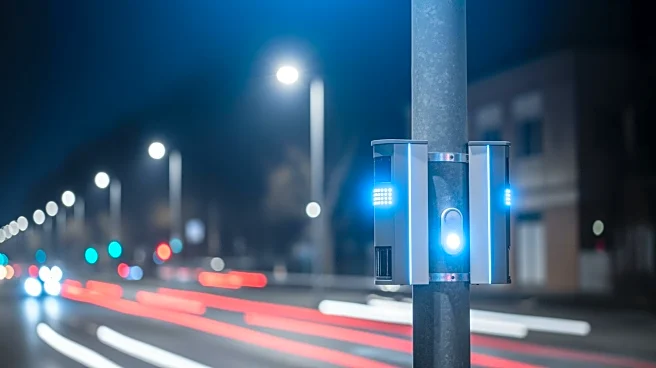
a new AI video accessory named UbiScout, alongside a universal streetlight controller called UbiCell Micro, and improvements to its management platform, UbiVu. These advancements aim to transform streetlights into intelligent systems capable of analyzing traffic and providing adaptive lighting solutions. UbiScout, as an accessory to UbiCell controllers, can collect data on pedestrians, vehicle traffic, and road conditions, offering valuable insights for urban planning. The UbiCell Micro, noted for its compact size and compliance with utility standards, enhances operational efficiency. UbiVu, already utilized by over 1,000 clients, now features integration with third-party sensors and improved management interfaces, broadening its application beyond streetlights to include transformers and utility poles.
Why It's Important?
The integration of AI into streetlight technology represents a significant step forward in smart city development. By enabling streetlights to perform tasks beyond illumination, such as traffic analysis and adaptive lighting, cities can improve energy efficiency and operational management. This technology can lead to better resource allocation and enhanced public safety through data-driven insights. The ability to integrate with third-party sensors and manage infrastructure comprehensively positions Ubicquia's solutions as pivotal in modernizing urban environments. Public agencies, like those in Maine and San Diego, are already leveraging these technologies for applications such as 5G connectivity and police surveillance, indicating a growing trend towards intelligent infrastructure.
What's Next?
As Ubicquia's enhanced streetlight technology gains traction, more cities are likely to adopt these solutions to address urban challenges. The deployment of AI-driven streetlights could lead to increased demand for smart city technologies, prompting further innovation in the sector. Public agencies may explore additional applications, such as environmental monitoring and emergency response optimization. The success of these technologies could influence policy decisions regarding urban planning and infrastructure investment, potentially leading to widespread adoption across the United States.