
What's Happening?
An Israeli company, Rom from the Luzon Group, has developed a technology called Morphit that converts construction waste into new building materials. This innovation addresses the significant issue of
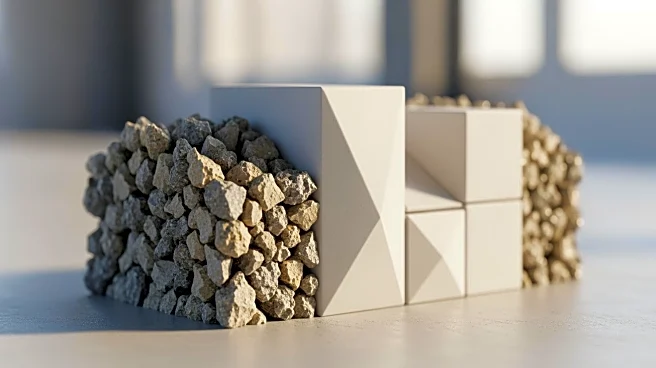
construction debris, which often ends up in illegal landfills or is costly to dispose of legally. Morphit allows for the creation of building materials such as blocks, panels, and partitions from construction waste without the need for sorting by type. The process involves crushing the waste, mixing it with binding agents and water, and casting it into molds. The resulting products contain up to 80% recycled material and meet strength tests comparable to conventional materials. This development is part of a broader effort to make the construction industry more sustainable and reduce its environmental impact.
Why It's Important?
The construction industry is a major contributor to waste and carbon emissions globally. In Israel, millions of tons of construction waste are sent to landfills annually, causing environmental harm and incurring high costs. The Morphit technology offers a sustainable solution by recycling waste into valuable building materials, potentially reducing illegal dumping and landfill use. This innovation could lead to significant cost savings for contractors and promote greener construction practices. By providing finished products rather than raw materials, Morphit may encourage more construction companies to adopt recycled materials, thus fostering a shift towards sustainability in the industry.
What's Next?
Rom is transitioning from research and development to seeking regulatory approvals and standards certification for Morphit. The company is exploring options for commercial production, including in-house manufacturing, partnerships, or licensing the technology internationally. With a focus on competitive pricing, Rom aims to integrate these recycled materials into its projects and expand into international markets, particularly in Europe where there is greater awareness and acceptance of green construction practices. The success of Morphit could pave the way for broader adoption of sustainable building materials in the construction industry.
Beyond the Headlines
The development of Morphit highlights the potential for innovation in traditional industries to address environmental challenges. By turning waste into a resource, this technology not only reduces environmental impact but also creates economic opportunities. The project underscores the importance of collaboration between industry and research institutions in driving sustainable solutions. As awareness of environmental issues grows, technologies like Morphit could play a crucial role in transforming industries and promoting a circular economy.