



What's Happening?
Cinematographer Greig Fraser, known for his work on films like 'The Batman' and 'Dune', has taken on a new challenge with 'Project Hail Mary', a film adaptation of Andy Weir's book. Directed by Phil Lord and Chris Miller, the film stars Ryan Gosling as Ryland
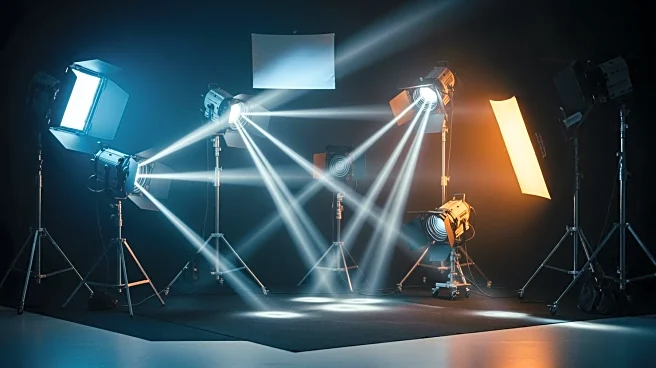
Grace, a former molecular biologist on a mission to save Earth. Fraser discusses the unique lighting challenges he faced, particularly in creating a sun effect for a tunnel scene. The film departs from traditional space visuals by using warmer tones, such as orange, to create a more human and analog feel. Fraser employed old tungsten lights to simulate sunlight in the tunnel, a decision driven by the need for a specific visual aesthetic that could not be achieved with modern LEDs.
Why It's Important?
The innovative lighting techniques used in 'Project Hail Mary' highlight the evolving nature of cinematography in film. By choosing to use warmer tones and analog methods, Fraser challenges the conventional cold and desaturated space visuals, potentially influencing future sci-fi films. This approach not only enhances the storytelling but also reflects a broader trend in the film industry towards blending traditional techniques with modern technology to create unique visual experiences. The film's success could encourage other filmmakers to explore similar methods, impacting how sci-fi narratives are visually represented.