






What's Happening?
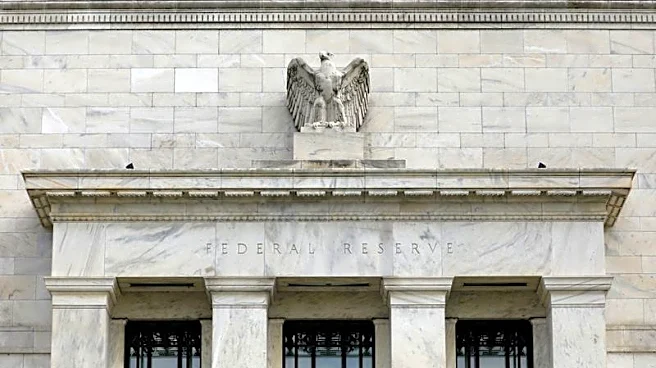
The Federal Reserve has decided to keep interest rates unchanged in response to rising prices triggered by an oil shock resulting from the ongoing conflict in Iran. This decision comes as the central bank monitors the economic impact of geopolitical tensions
and their influence on inflation. The Federal Reserve's move to hold rates steady reflects its cautious approach in navigating the current economic landscape, where external factors such as international conflicts are contributing to price volatility.
Why It's Important?
The Federal Reserve's decision to maintain interest rates is significant as it highlights the central bank's strategy to balance economic stability with inflation control. By keeping rates steady, the Federal Reserve aims to support economic growth while managing inflationary pressures exacerbated by external shocks like the Iran conflict. This decision impacts various stakeholders, including businesses and consumers, who may experience changes in borrowing costs and purchasing power. The central bank's approach also signals its readiness to adapt to evolving economic conditions, ensuring that monetary policy remains responsive to global events.
What's Next?
Looking ahead, the Federal Reserve will likely continue to assess the economic implications of the Iran conflict and other global developments. The central bank may adjust its monetary policy in response to changes in inflation and economic growth indicators. Stakeholders, including financial markets and policymakers, will closely monitor the Federal Reserve's future actions and statements for insights into its economic outlook and potential rate adjustments. The ongoing geopolitical tensions may also prompt discussions on energy policy and its impact on inflation and economic stability.