
What's Happening?
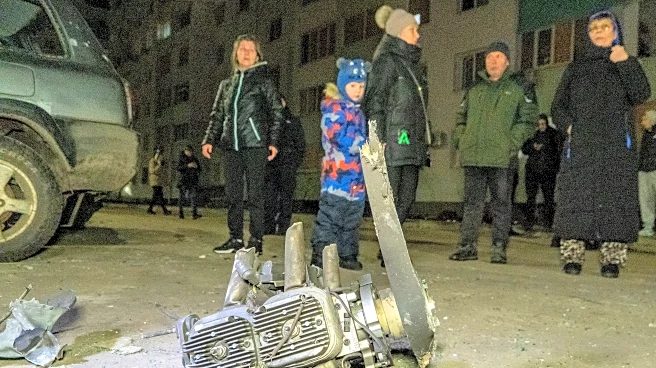
Belgian director Pieter-Jan De Pue has spent nearly a decade documenting the lives of young people in Ukraine for his film 'Mariinka,' which premiered at the CPH:DOX festival. The project began before Russia's full-scale invasion of Ukraine in 2022 and
evolved from a story about four brothers to a broader narrative about youth adapting to war. De Pue's work involved extensive time in Ukraine, where he built trust with his subjects and adapted to the challenges of filming in a conflict zone. The film captures the complexities of life in the Donbas region, highlighting personal stories such as a promising boxer turned paramedic and a smuggler navigating the frontlines.
Why It's Important?
The film 'Mariinka' offers a unique perspective on the human impact of the ongoing conflict in Ukraine, focusing on the resilience and adaptability of the country's youth. By documenting these personal stories, De Pue provides insight into the broader socio-political dynamics at play in the region. The film's release comes at a time when international attention is focused on Ukraine, offering audiences a deeper understanding of the war's effects on individuals and communities. This narrative contributes to the global discourse on conflict and its human toll, potentially influencing public opinion and policy decisions related to the region.
What's Next?
Following its premiere at CPH:DOX, 'Mariinka' is expected to continue its festival circuit, potentially reaching wider audiences and sparking discussions about the ongoing conflict in Ukraine. The film's detailed portrayal of life in a war-torn region may lead to increased awareness and support for humanitarian efforts. Additionally, the documentary could inspire further artistic and journalistic explorations of similar themes, contributing to a broader understanding of the complexities of war and its impact on society.
Beyond the Headlines
Beyond its immediate narrative, 'Mariinka' raises questions about the role of documentary filmmaking in conflict zones and the ethical considerations involved in such projects. De Pue's approach, which involved living in Ukraine and learning the language, underscores the importance of cultural sensitivity and trust-building in storytelling. The film also highlights the potential for art to serve as a tool for empathy and education, bridging gaps between distant audiences and the realities of those living in conflict.