
What's Happening?
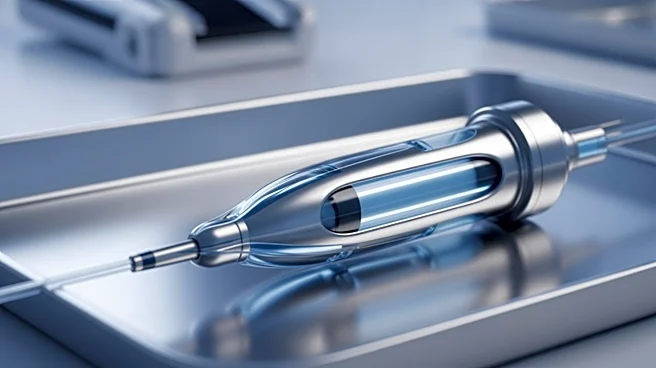
Boston Scientific Corporation has announced successful results from the FRACTURE Investigational Device Exemption (IDE) trial for its SEISMIQ 4CE Coronary Intravascular Lithotripsy Catheter. The trial,
which was presented at the EuroPCR 2026 congress, evaluated the catheter's use in treating patients with severely calcified coronary artery disease (CAD). The study met its primary safety and effectiveness endpoints, showing high rates of freedom from major adverse cardiac events (MACE) and procedural success. The SEISMIQ 4CE catheter uses laser energy to generate acoustic pressure waves that fracture calcium deposits in coronary arteries, facilitating stent delivery and expansion. The trial enrolled 420 patients and demonstrated a 93.3% rate of freedom from MACE and a 93.7% procedural success rate, surpassing pre-specified performance goals.
Why It's Important?
The positive results from the FRACTURE trial are significant for the medical community, particularly in the treatment of coronary artery disease, which affects a substantial portion of the population undergoing percutaneous coronary intervention (PCI). The SEISMIQ 4CE catheter's ability to effectively treat severe coronary calcification could lead to improved patient outcomes by reducing procedural complications and enhancing stent delivery. This advancement in intravascular lithotripsy (IVL) technology represents a critical development in addressing complex coronary lesions, potentially expanding treatment options for high-risk patients. The trial's success may also support Boston Scientific's regulatory submissions, paving the way for broader adoption of this innovative device in clinical practice.
What's Next?
Following the successful trial results, Boston Scientific is likely to pursue regulatory approval for the SEISMIQ 4CE catheter, aiming to introduce it as a new option for treating severe coronary calcification. The company plans to continue monitoring the trial participants for two years to gather long-term data on the device's safety and effectiveness. If approved, the catheter could become a valuable tool for interventional cardiologists, potentially influencing treatment protocols and improving outcomes for patients with complex coronary artery disease. The medical community and regulatory bodies will be closely watching the next steps in the device's approval process.