



What's Happening?
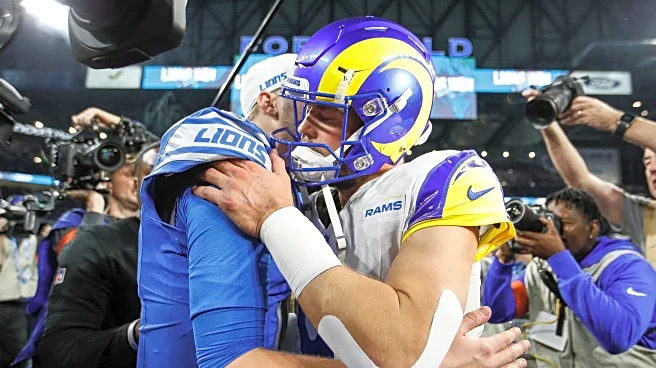
The Los Angeles Rams, accustomed to milder climates, faced the challenge of playing in the cold weather of Chicago against the Bears. To tackle the freezing conditions, the team transported over 2,000 pounds of cold-weather gear from Los Angeles. During the game, which had a kickoff temperature of around 19 degrees with a wind chill making it feel like 9 degrees, the Rams used various unconventional methods to stay warm. These included having heaters on the sidelines, and players consuming chicken broth and hot chocolate. Notably, quarterback Matthew Stafford wore a scuba suit under his jersey to maintain warmth without restricting movement. Additionally, players reportedly put cayenne pepper in their socks as a warming tactic.
Why It's Important?
The Rams' approach
to dealing with the cold highlights the lengths to which teams will go to ensure player comfort and performance in adverse conditions. This situation underscores the importance of adaptability and innovation in professional sports, where environmental factors can significantly impact game outcomes. The Rams' strategies could influence other teams facing similar challenges, prompting a reevaluation of traditional methods for dealing with extreme weather. This also reflects on the broader sports industry, where player safety and performance are paramount, potentially leading to new standards in equipment and preparation for cold-weather games.
What's Next?
As the NFL season progresses, other teams may adopt similar strategies when facing cold-weather games, especially those not accustomed to such climates. The Rams' experience could lead to further innovations in sports gear designed to maintain warmth without compromising athletic performance. Additionally, the league might consider providing guidelines or support for teams playing in extreme weather conditions to ensure player safety and optimal performance. The effectiveness of these methods could be analyzed in future games, influencing how teams prepare for and manage environmental challenges.